Moroccan soup for dogs
Bei Durchfall & Co: Wann sollte ich meinem Hund Moro Suppe geben?
Die Moro Suppe kann vor allem dann hilfreich sein, wenn dein Hund kurzfristig eine milde Schonkost braucht. Sie ist einfach zusammengesetzt und wird von vielen Hunden gut angenommen. Trotzdem gilt: Bei starken, länger anhaltenden oder wiederkehrenden Beschwerden solltest du tierärztlichen Rat einholen.
Morosche Möhrensuppe kann hilfreich sein:
- bei kurzzeitigem Durchfall, wenn dein Hund sonst fit wirkt
- nach einer Magen-Darm-Reizung, um langsam wieder mit kleinen Portionen zu starten
- bei weichem Kot, wenn du die Verdauung vorübergehend schonen möchtest
- begleitend bei Giardien, aber nur zusätzlich zur tierärztlichen Abklärung und Behandlung
- nach Erbrechen, sobald dein Hund wieder stabil ist und Futter bei sich behält
Auch bei Sodbrennen oder dem Verdacht auf eine Magenschleimhautentzündung wird Morosche Suppe für Hunde manchmal als Schonkost genutzt. Die Ursache der Beschwerden solltest du jedoch immer abklären lassen, damit dein Hund bei Bedarf passend unterstützt werden kann.
Das Originalrezept der Morschen Möhrensuppe
Das Grundrezept bleibt bewusst schlicht. Für die Morosche Suppe brauchst du nur wenige Zutaten: Karotten, Wasser und etwas Salz. Entscheidend ist vor allem die lange Kochzeit. Dadurch unterscheidet sich die Suppe von einer gewöhnlichen Möhrensuppe.
Zutaten und Zubereitung
Für die Moro Suppe brauchst du folgende Zutaten:
- 500 g Karotten
- 1 Liter Wasser
- 1 TL Salz
So einfach gelingt die Zubereitung:
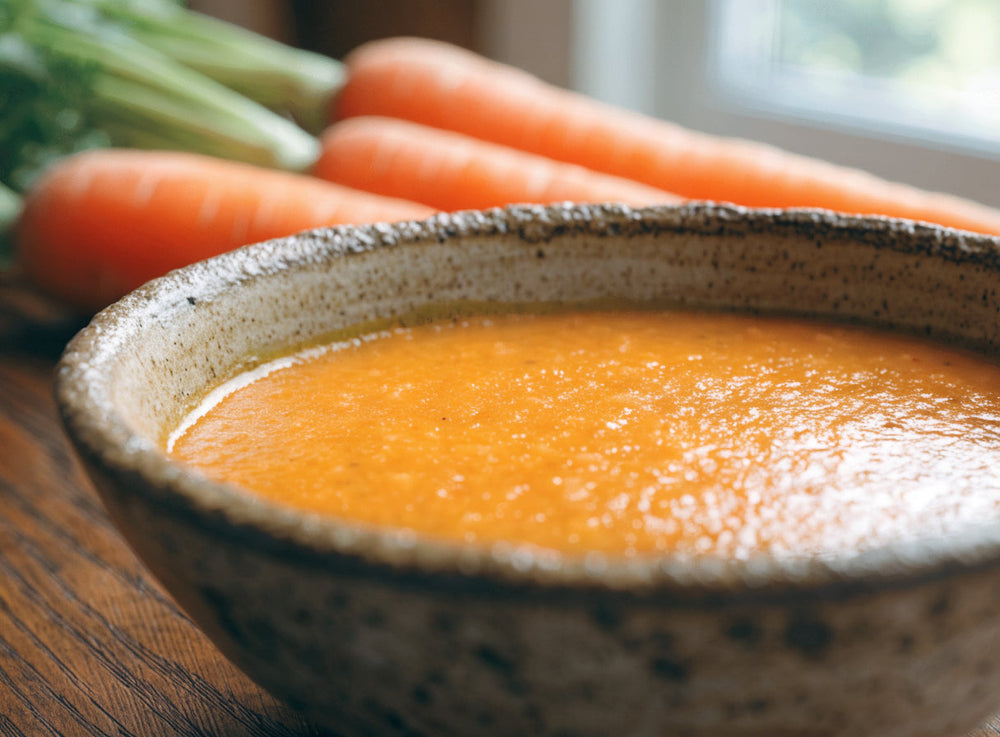
Schäle zunächst die Karotten und schneide sie klein. Bringe das Wasser zum Kochen und koche die Karottenstücke darin 1,5 bis 2 Stunden. Püriere anschließend die Suppe und füge das Salz hinzu. Die Konsistenz sollte etwa der von Buttermilch entsprechen. Ist die Suppe zu dickflüssig, gib einfach etwas abgekochtes Wasser hinzu. Nach dem Kochen etwas abkühlen lassen und fertig ist die Morosche Suppe für deinen Hund!
Unser Tipp: Du kannst die frisch zubereitete Suppe auch portionsweise im Kühlschrank aufbewahren oder einfrieren. Mittlerweile kannst du aber auch Morosche Karottensuppe fertig kaufen. Wichtig ist dabei eine überschaubare Zutatenliste und eine passende Fütterungsempfehlung.
5 einfache Schritte mit dem Thermomix
Mit denselben Zutaten wie für das grundlegende Rezept lässt sich die Morosche Karottensuppe auch im Thermomix zubereiten:
- Schäle die Karotten und schneide sie in ca. 4 cm große Stücke
- Gebe die Karotten in den Mixtopf und lasse sie für 5 Sekunden auf Stufe 5 zerkleinern
- Gib das Wasser hinzu, schließe den Mixtopf, setze den Messbecher ein und lass die Suppe für 75 Minuten bei 100 °C mit Stufe 2 kochen
- Gib das Salz hinzu
- Falls noch große Stücke vorhanden sind, kannst du die Suppe noch einmal für 30 Sekunden auf Stufe 7 pürieren
Wie viel sollte ich meinem Hund pro Tag geben?
Wie viel Moro Suppe dein Hund pro Tag bekommen sollte, richtet sich vor allem nach seinem Gewicht und wie gut er sie verträgt. Starte am besten mit kleinen Portionen und verteile die Suppe auf etwa vier bis fünf Mahlzeiten. Als grobe Orientierung gelten rund 30 ml pro Kilogramm Körpergewicht am Tag. Ein Hund mit 10 kg Körpergewicht würde also etwa 300 ml pro Tag bekommen. Nimmt dein Hund die Suppe gut an, kannst du die Menge langsam steigern. Sobald sich der Kot normalisiert, solltest du die Suppe schrittweise reduzieren und wieder zum gewohnten Futter übergehen.
Wie Morosche Suppe die Verdauung deines Hundes unterstützen kann
Beim ausgedehnten Kochen der Karotten entstehen sogenannte Oligosaccharide. Diese speziellen Kohlenhydrate können bestimmten Bindungsstellen an der Darmwand ähneln. Dadurch können sich einige Keime eher an diese Oligosaccharide heften, statt direkt an der Darmwand anzudocken. Mit dem Nahrungsbrei werden sie anschließend leichter ausgeschieden.
Möhren enthalten außerdem Ballaststoffe, die eine normale Darmfunktion unterstützen können. Der hinzugefügte Teelöffel Salz kann zudem dabei helfen, den Verlust von Elektrolyten bei Durchfall etwas auszugleichen.
Fazit: Die ideale Schonkost für Hunde
Morosche Suppe kann eine einfache Möglichkeit sein, deinen Hund bei kurzfristigem Durchfall mit einer milden Schonkost zu unterstützen. Wichtig sind die lange Kochzeit, die passende Dosierung und kleine Portionen über den Tag verteilt.
Halten die Beschwerden länger an, kommen Erbrechen, Blut im Kot oder starke Schlappheit dazu, solltest du immer tierärztlichen Rat einholen. Sobald sich die Verdauung normalisiert, kannst du die Suppe langsam absetzen und wieder zum gewohnten Futter zurückkehren.