Share
 Carla
Carla Meine Mission bei VEGDOG ist, bei der Entwicklung von Produkten mitzuwirken, die
sowohl unsere geliebten Hunde mit allem versorgen, was sie benötigen, als auch einen Beitrag zum Tier- und Umweltschutz leisten.
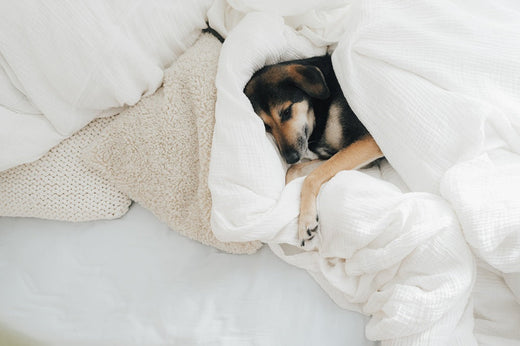
Good sleep is important - for two- and four-legged friends! Find out more about your dog's sleep and how you can support a restful night's sleep in this article!
Ein erholsamer Schlaf ist essenziell für die Gesundheit und das Wohlbefinden deines Hundes. Ähnlich wie bei uns Menschen sorgt guter Schlaf bei Hunden für Regeneration, die Verarbeitung von Eindrücken und innere Ausgeglichenheit. In diesem Blogartikel erfährst du, wie du den Schlaf deines Vierbeiners fördern kannst, worauf du achten solltest und welche Gewohnheiten wichtig sind, um ihm die bestmögliche Erholung zu bieten.
Während Hunde schlafen, passieren wichtige Prozesse im Körper:
Der Schlafbedarf eines Hundes hängt von Alter, Größe und Aktivitätslevel ab:
Zusätzlich zu den tiefen Schlafphasen brauchen Hunde auch Zeiten des Dösens, in denen sie entspannen und den Energiehaushalt ausgleichen.
Viele Hunde schlafen nachts über längere Zeiträume, aber nicht immer komplett durch. Anders als wir wechseln sie häufiger zwischen leichtem Schlaf, Tiefschlaf und kurzen Wachphasen. Dazu kommt, dass Hunde einen Teil ihres Schlafs auch tagsüber nachholen. Es ist also ganz normal, wenn dein Hund nachts mal die Position wechselt, kurz aufwacht oder sich nach einem Geräusch umsieht und danach wieder entspannt einschläft.
Während des Schlafs durchlaufen Hunde verschiedene Schlafphasen, einschließlich der REM-Phase (Rapid Eye Movement), in der sie träumen können. Wer seinen Hund schon einmal im Schlaf beobachtet hat, hat vielleicht bemerkt, wie er zuckt, seine Pfoten bewegt oder sogar leise winselt, bellt und knurrt. All das deutet darauf hin, dass er gerade träumt und im Schlaf die Erlebnisse des Tages verarbeitet.
Feste Routinen und gezielte Maßnahmen können helfen, den Schlaf deines Hundes zu verbessern:
Wenn du deinem Hund abends noch einen kleinen Snack geben möchtest, passen unsere Bedtime Cookies gut in die Abendroutine. Die glutenfreie und ballaststoffreiche Rezeptur auf Kartoffel-Basis ist auch für sensible Hunde gut geeignet. Mit L-Tryptophan, das im Körper an der Bildung von Serotonin und Melatonin beteiligt ist, und Kamille, der traditionell beruhigende Eigenschaften zugeschrieben werden, eignen sich die Hundekekse gut für ein entspanntes Abendritual.
Die Haltung, in der dein Hund schläft, kann etwas über sein Wohlbefinden verraten:
Schlaf ist für Hunde genauso wichtig wie für uns Menschen. Ein Mangel an Ruhe kann sich daher negativ auf die Gesundheit und das Wohlbefinden deiner Fellnase auswirken. Hier sind einige mögliche Folgen von Schlafmangel:
Manchmal deuten Schlafprobleme auf gesundheitliche oder emotionale Herausforderungen hin. Achte auf:
In solchen Fällen solltest du gegebenenfalls einen Tierarzt oder eine Tierärztin konsultieren, um gesundheitliche Ursachen auszuschließen.
Ein entspannter und gut ausgeschlafener Hund wirkt oft ausgeglichener und fühlt sich wohler. Mit einem gemütlichen Schlafplatz, festen Routinen und ausreichend Bewegung kannst du viel dazu beitragen, dass dein Hund gut zur Ruhe kommt. Achte dabei immer auf seine individuellen Bedürfnisse, denn auch beim Schlafen ist jeder Hund ein bisschen anders.
Carla