WIE DER WOLF ZU UNSEREM BESTEN FREUND WURDE

HOW THE WOLF BECAME OUR BEST FRIEND

There are very different figures as to when wolves met humans and when their shared history began. Some sources assume 100,000 years (1), others 30,000 (2) to 45,000 years.
Reading time: 6min
Alena ThielertFrom: Alena Thielert
Carla SteffenChecked: Carla Steffen
Modified: 01.10.2024
Published: 09.03.2021

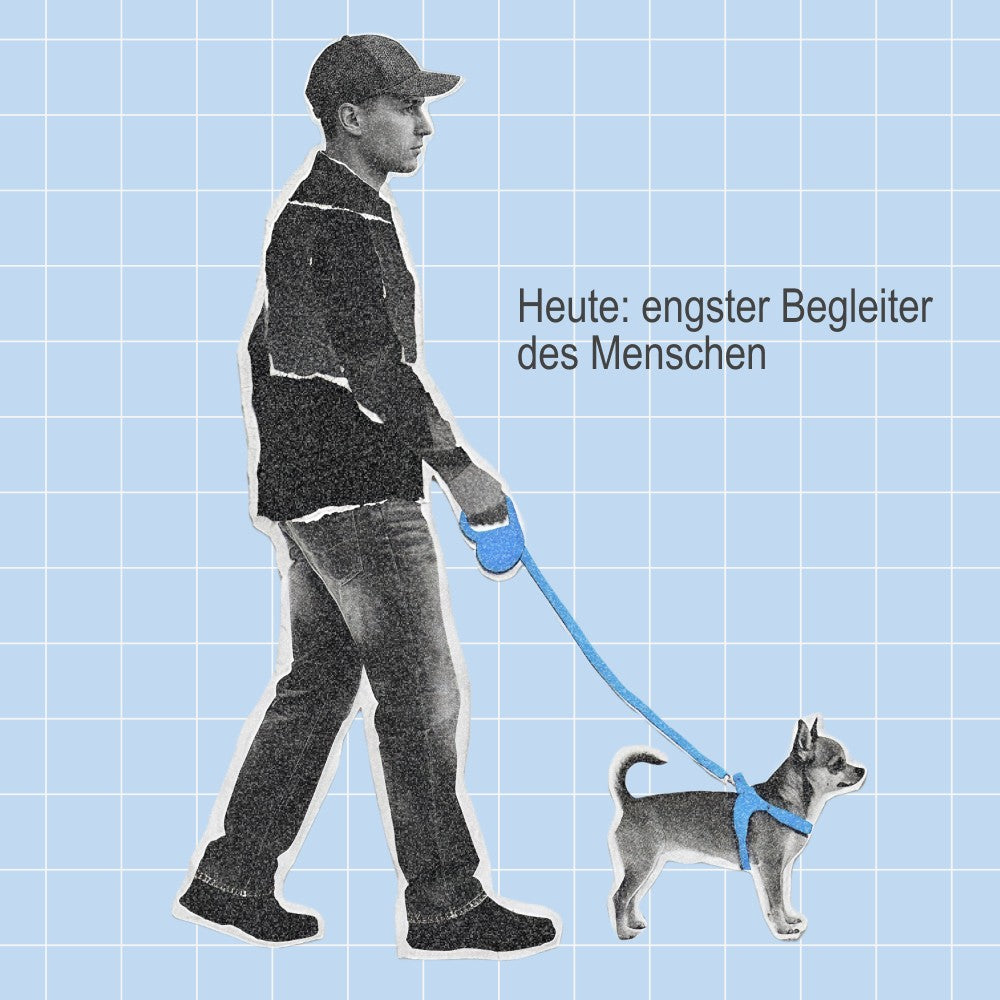
We have a long history with dogs: initially, as wolves, they brought benefits with them. Then he developed into a partner. And today it is a member of the family, our best friend. The dog was man's first pet and over the decades a unique relationship has developed with him. At least every person who shares their life with a dog would subscribe to this statement.

Come with us on a journey through time as we explore together the evolution of the wolf into today's domestic dog.

THE WOLF CONQUERED THE WORLD

Our journey begins around a million years ago with the appearance of the wolf (Canis lupus). It has spread from Europe and Asia to almost the entire world, adapting to the most diverse, sometimes extreme habitats and conditions. It is a fast predator, strong, flexible and clever. This made the wolf the most widespread predator on earth for a long time.

THEN Came HUMANS

There are very different figures as to when wolves met humans and when their shared history began. Some sources assume 100,000 years (1), others 30,000 (2) to 45,000 years. What is clear, however, is that humans and dogs have been connected for many decades.

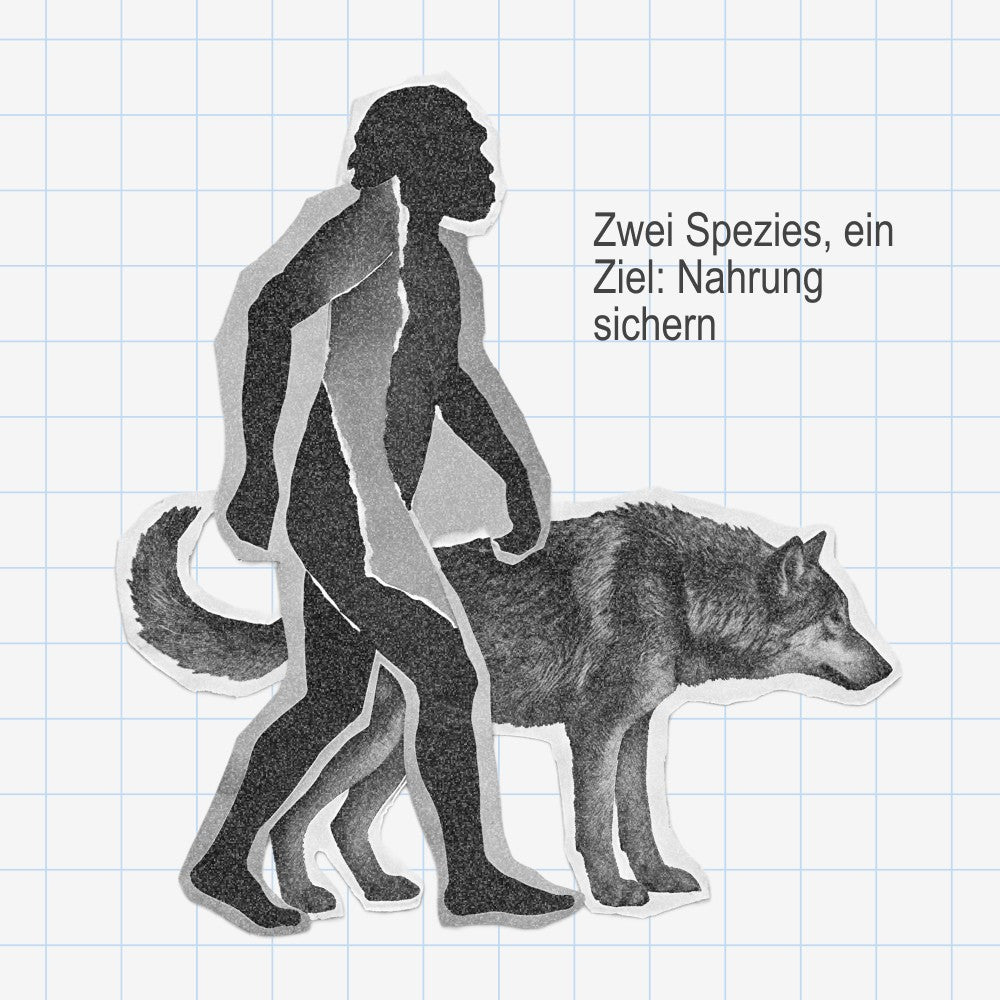
At first, the wolf observed humans. Both humans and wolves were successful hunters with a similar range of prey. Both primarily hunted large game (z.B. the giant deer) and often shared the same hunting ground. This made wolves and humans competitors.

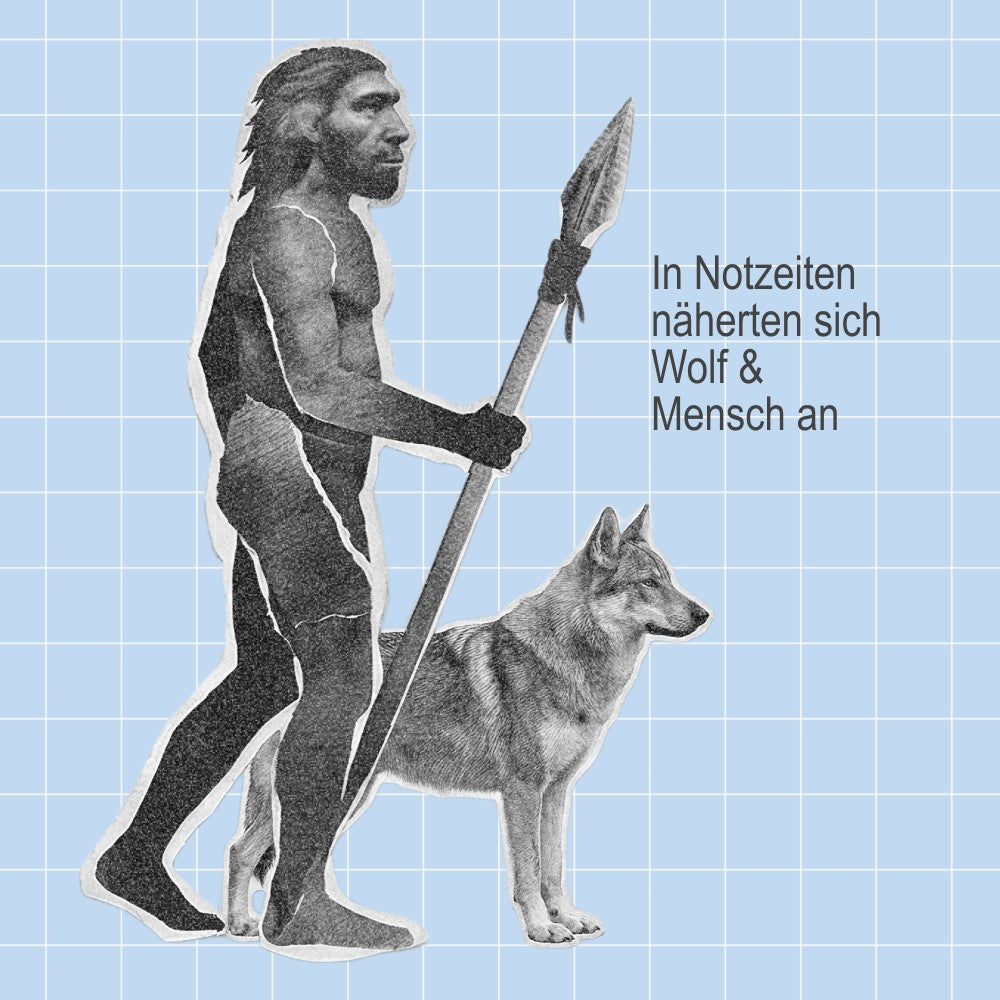
In times of need, the wolves ventured into people's camps and searched for food scraps in the waste. Less timid animals reduced their flight distance over time, but were tolerated by humans. This developed into a purposeful relationship: The wolf could find food from humans, while the latter warned of wild animals or tracked them down for hunting.

THE BEGINNING OF AN ETERNAL PARTNERSHIP

The direct ancestor of the dog is the lager wolf (3). Although not yet tamed, it already had experience of living with humans. This resulted in the first taming, presumably by hand-rearing pups. Researchers assume that this period was nevertheless accompanied by conflicts between humans and animals and that wolves were also killed by humans for consumption in times of need (4).

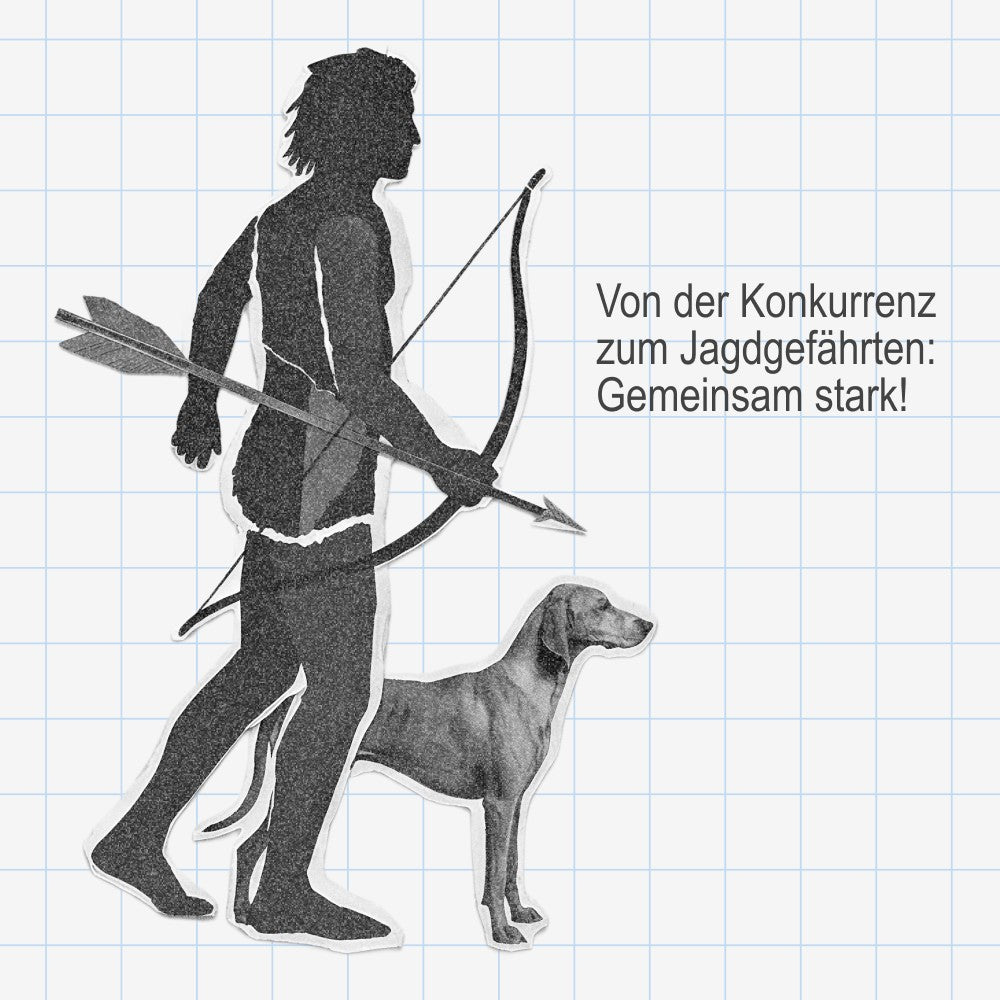
The end of the last ice age (around 10,000 years ago) marked a turning point in human hunting behavior. Large game such as the mammoth became extinct, so hunting had to be switched to smaller, faster animals. Here, the wolf proved to be an ideal support: it tracked down the animals and drove them directly in front of the hunters' spears. Thus, the wolf established itself as an ideal hunting companion and partner.

FROM HUNTER TO PROTECTOR

In the Neolithic period (depending on the region, around 8,500 to 3.300 BC) another important turning point took place. Not only for the development of humans, but also in the domestication of dogs: Humans became sedentary and changed from hunter-gatherers to farmers and livestock breeders. The dog took on the important role of guard and herding dog. Unlike the wolf, the hunting instinct in dogs can be weakly developed or trained away. As a result, the dog has taken a firm place in the community. A place that a wolf could not and would not have wanted to occupy.

DOGS "MUTE" TO EAT EVERYTHING

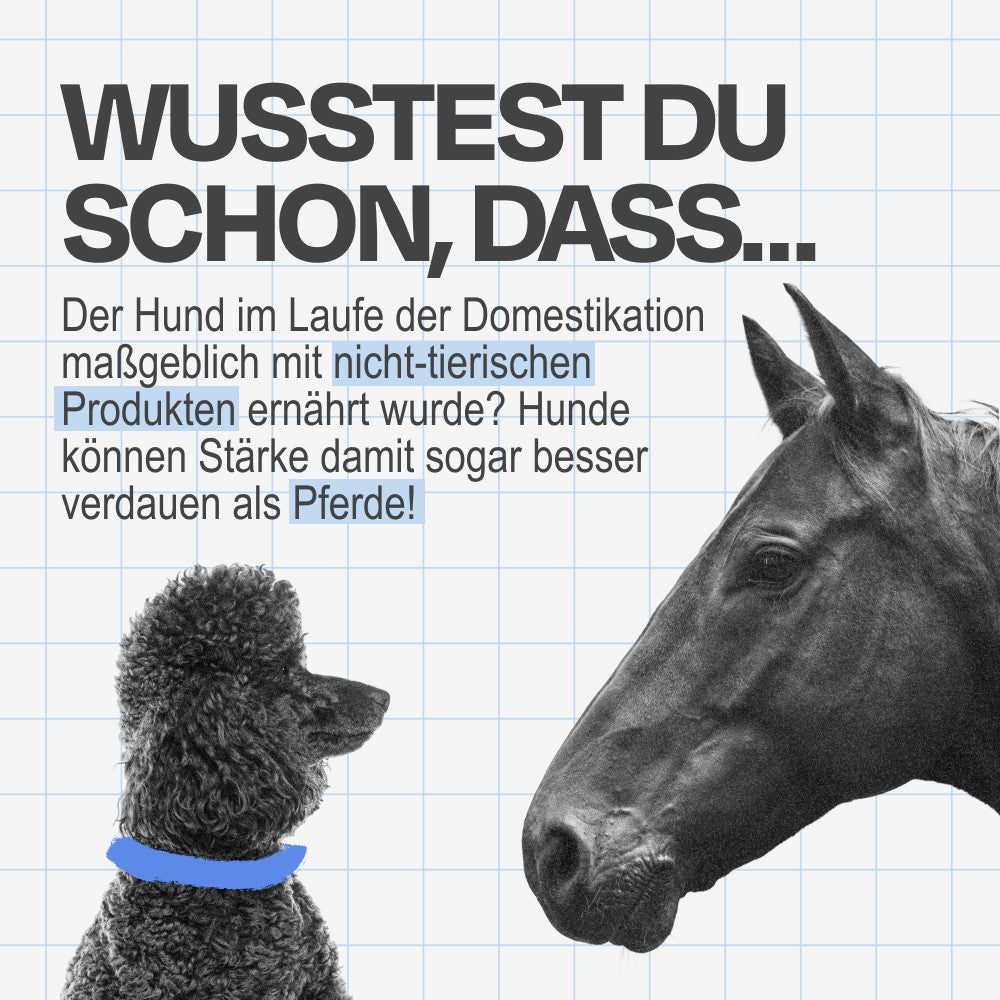
The dog could now also be fed by humans, but as meat was still valuable and reserved for humans, the dog's diet still consisted largely of plant-based ingredients. This led to a mutation of the genes: Today, the dog has five times the amount of amylase enzymes (even more than horses!) and can therefore digest starch (5). The dog was therefore perfectly adapted to the predominantly plant-based diet of the time.

HUMANS BEGAN TO SHAPE

Over time, humans and dogs have adapted more and more to living together. Thus, different breeds have developed in different parts of the world based on the respective needs and conditions:

The Tesem, one of the oldest dog breeds, originated in Egypt during the time of the pharaohs (around 2,707 to 1075 BC). There was a very close relationship between man and dog, it was recognized as part of the family and had a name. The dog had a special significance for the Egyptians, as the god Anubis watched over the dead. After the death of his dog, the owner would shave his head bald as a sign of mourning.

The strong, fearless Molosser was used as a war dog in ancient Persia (550 to 330 BC) and by the Romans in arena battles.

Arab Bedouins are said to have been the first to breed Peruvian greyhounds, which were perfectly adapted to hunting thanks to their narrow body and long legs.

Chinese emperors had a preference for small dogs, which gave rise to the Pekingese during the Han dynasty (206 BC to 220 AD).

THE DOG SHOULD LEARN

In the year 4 BC, the Greek Xenophon wrote the work "Kynegetikós", in which the breeding and training of dogs is recorded for the first time. Even then, he stated that dogs should have short names and that commands should be short and clear. The words he wrote down are still relevant today.

A UNIQUE RELATIONSHIP

Scientists believe that humans would not be where they are today without dogs, as they have played a key role in shaping human development. Today, dogs are the most popular pet after cats. in 2020, 10.56 million dogs lived in German households (6). (Quelle: Statista).

A unique relationship has developed between humans and dogs over the decades.The dog can read our emotions, identify our gestures and facial expressions, understand us.He can correlate language and tone of voice and only acknowledges praise if it matches the tone of voice. When we look at our dogs, we release happiness hormones. At the same time, our stress hormone drops when we stroke them. These hormone changes are also possible in dogs (7, 8). There are also various studies that show that people lead healthier lives with dogs. In Sweden, it was confirmed that dog owners live an average of three years longer (9).

WHERE HAS THE WOLF GONE?

After all these years of living and developing together, very little remains of the wolf. While the wolf is a pack animal with a pronounced social sense within the family, the dog has shifted its social behavior away from its conspecifics towards humans. He is now his social partner, to whom his loyalty and cooperation apply.

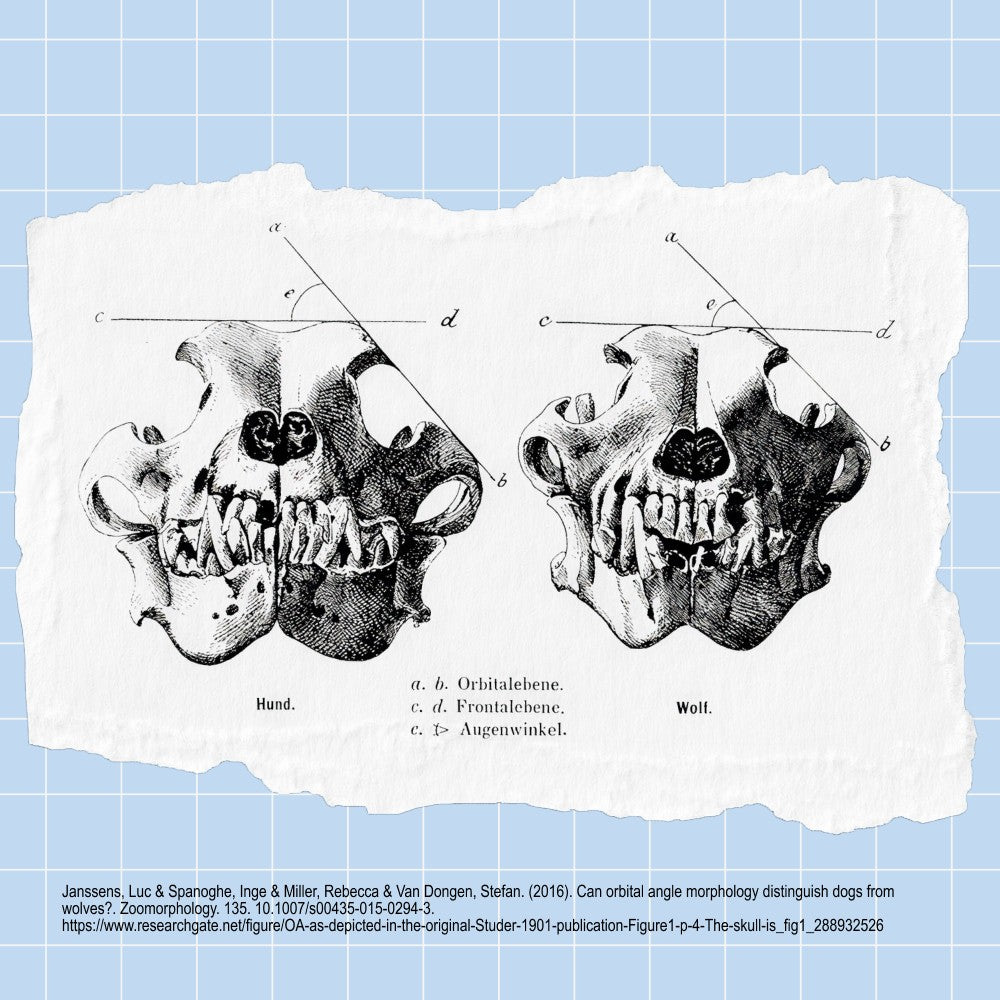
A lot has also changed visually: There are now around 400 dog breeds. Some of them have depressed noses, short tails or huge eyes. Some characteristics even affect the health of the animals.

We put collars and leads on our dogs, determine their eating and walking times. We take them to the vet, cuddle them on the sofa and teach them tricks. It's only when it comes to feeding that many people think they have another wolf and hunter sitting on the sofa at home. And just between you and me, the idea of a pack of Chihuahuas trying to chase a cow makes us smile a little 😉

Even street dogs prefer to join humans and feed on their waste instead of hunting themselves. Just like the wolf did many decades ago. Living with humans conserves resources and is therefore species-preserving.

MY DOG, THE VEGAN...?

So why is it that wolf ancestry is repeatedly used as an argument for a meat-heavy diet?

<tc>Tessa Zaune-Figlar</tc>, founder of <tc>VEGDOG</tc>

Dogs, unlike wolves, are able to metabolizestarch due to their domestication and are therefore omnivores like humans (5).Dogs can digest vegetable protein just as well as animal protein, provided it is available to them in a suitable form.Dogs therefore need protein and not meat!

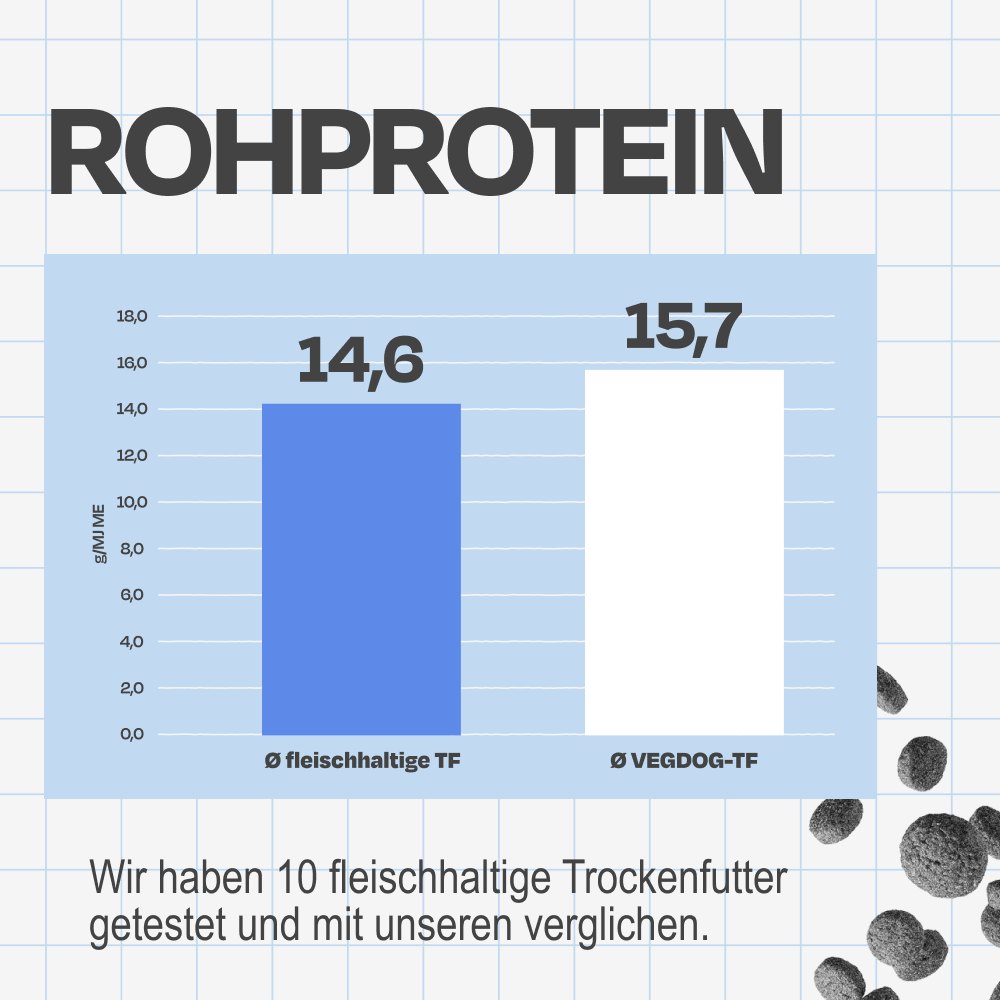
Like us humans, dogs today eat far too much meat. It is readily available and cheap. Unlike in the past, when it was a specialty. In the 1990s, for example, feed contained only 4% animal by-products, whereas today the proportion of meat is up to 80% pure muscle meat. This is also the reason for the increasing number of food allergies. Some dogs can no longer even tolerate animal protein in large quantities (10, 11), as confirmed by BMC Veterinary Research:

BMC Veterinary Research by Mueller et al, 2016 (9)

The most frequently reported food allergens involved in CAFRs in dogs were beef (102 dogs, 34 %), dairy products (51 dogs, 17 %), chicken (45 dogs, 15 %), wheat (38 dogs, 13 %) and lamb (14, 5 %). Other less commonly reported offending food sources were soy (18 dogs, 6 %), corn (13 dogs, 4 %), egg (11 dogs, 4 %), pork (7 dogs, 2 %), fish and rice (5 dogs each, 2 %).

A meat-heavy dog diet is therefore inappropriate, whereas aplant-based diet is not only possible, but in some cases even advisable.

It is crucial that dogs enjoy their food and that they are provided with all the necessary nutrients. And that's what we stand for with our VEGDOGproducts. If we can also save lives and protect the climate, a vegan dog diet should no longer be a cause for discussion. Even one veggie day a week makes a big difference, because EVERY DOSE COUNTS!

Wolves are wonderful animals and we are grateful that he is the ancestor of our dogs. Without him, our furry friends wouldn't exist. But the wolf lives in the wild and the dog lives in our homes and houses. The other way around would no longer be possible today. So it's time to move away from the wolf comparison when it comes to nutrition too.

SOURCES

(1) Vilà, C., et al, Multiple and Ancient Origins of the Domestic Dog. Science, 1997. 276(5319): p. 1687.

(2) Skoglund, P., A. Götherström, and M. Jakobsson, Estimation of Population Divergence Times from Non-Overlapping Genomic Sequences: Examples from Dogs and Wolves. Molecular Biology and Evolution, 2010. 28(4): p. 1505-1517.

(3) Freedman, A.H., et al., Genome sequencing highlights the dynamic early history of dogs. PLoS Genet, 2014. 10(1): p. e1004016.

(4) Galibert, F., et al., Toward understanding dog evolutionary and domestication history. Comptes Rendus Biologies, 2011. 334(3): p. 190-196.6. Axelsson, E., et al, The genomic signature of dog domestication reveals adaptation to a starch-rich diet. Nature, 2013. 495(7441): p. 360-364.

(5) Axelsson, E., et al., The genomic signature of dog domestication reveals adaptation to a starch-rich diet. Nature, 2013. 495(7441): p. 360-364.

(6) Statista (2021), Pet owners in Germany by number of dogs in the household from 2017 to 2020. 23.02.2021.

(7) Archer, J., Why do people love their pets? Evolution and Human Behavior, 1997. 18(4): p. 237-259.

(8) Topal, J., Attachment behavior in dogs (Canis familiaris): A new application of Ainsworth's (1969) Strange Situation Test. Journal of Comparative Psychology, 1998. 112(3): p. 219-229.

(9) Mubanga, M., et al, Dog ownership and the risk of cardiovascular disease and death - a nationwide cohort study.Scientific Reports, 2017. 7(1): p. 15821.

(10) Mueller, R.S., T. Olivry, and P. Prélaud, Critically appraised topic on adverse food reactions of companion animals (2): common food allergen sources in dogs and cats. BMC Veterinary Research, 2016. 12(1): p. 9.12.

(11) Meyer&Zentek, Ernährung des Hundes, ed. 7. 2013, Berlin: Thieme Verlagsgruppe

Alena Thielert Alena Thielert

My dog Negrutu and I joined the VEGDOG pack in October 2020. I can now use my degree in environmental protection and experience from various activities in environmental and animal protection for the newsletter, YouTube channel, PR and blog.

Back to the blog