Suitable foods for dogs - oils
In the second part of our series "Suitable foods for dogs", we look at "oil" as an important source of energy and essential fatty acids. You can read the basics about the structure, functions and examples of suitable oils for dogs here.
 From: Carla Steffen
 Checked: Veronika H.
Suitable foods for dogs - oils
Part 2: Buying the right oil for your dog!
In the second part of our series "Suitable foods for dogs", we look at "oil" as an important source of energy and as a supplier of essential fatty acids, especially in vegan dog food. You can read the basics about the structure, functions and examples of suitable oils for dogs here
Basics on the structure and classification of fats
Fats are compounds of individual fatty acids and glycerine. Depending on whether there are double bonds between the carbon atoms or not, they are referred to as "unsaturated" (z.B. vegetable oil) or "saturated" fatty acids (z.B. butter). The double bonds are relatively sensitive to external influences. They should therefore be protected from light and oxygen in order to reduce oxidation, as this leads to rancidity. The quantity of carbon atoms varies and leads to the classification into short, medium and long-chain fatty acids. Basically, the more carbon atoms and the more double bonds a fatty acid has, the more sensitive it is. Oil has a wide variety of functions for the body. On the one hand, oil is an excellent source of energy. You can significantly increase the energy content of the ration with this food without unbalancing the nutrient ratio. If your dog tolerates oil well, you can also add a little oil to the ready-made food. You don't have to worry that the nutrients are no longer present in the right proportions. The amount of oil should be individually adjusted to the animal. Caution is advised in the case of some diseases, z.B. dogs that already suffer from pancreatitis. These animals should be fed as low a fat diet as possible. In these cases, please ask your vet for advice!
Shiny coat or better learning ability: A personalized fatty acid composition for your dog!
Linoleic acid (omega-6 fatty acid) and α-linolenic acid (omega-3 fatty acid) are essential for dogs, d.h. these should be added to the diet. Linoleic acid is important for healthy skin and a beautiful coat, which is why deficiency symptoms can manifest themselves in hair loss and a dull coat. The healing of wounds can also be impaired. Dogs can produce arachidonic acid from linoleic acid, a precursor for certain messenger substances (z.B. Thromboxanes). From α-linolenic acid (e.g. in linseed oil), the dog itself produces DHA and EPA to a certain extent, which play an important role in the development of the nervous system and retina as well as in inflammatory processes. DHA is also important for learning ability. As it is not known to what extent dogs can synthesize EPA/DHA themselves, we recommend regular supplementation with algae oil. This is why VEGDOG offers VISH OIL , an oil combining hemp, algae and linseed oil, to ensure the most balanced diet possible.
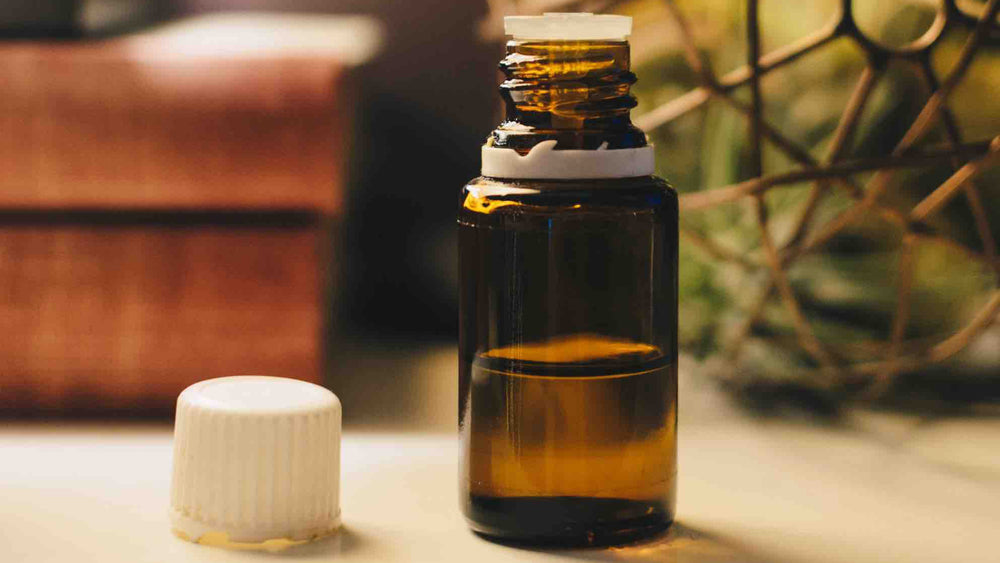
The positive properties of oils are only preserved when stored properly, otherwise the fat becomes rancid and can cause vomiting and diarrhea. It makes sense to store oils in small, opaque bottles in a cool place. You should screw the lids on tightly to reduce oxidation with oxygen.
Examples of oils containing omega-6 and omega-3:
- Omega-3 fatty acids: e.g. linseed, algae and chia oil
- Omega-6 fatty acids: e.g. flaxseed, algae and chia oil
- . Sunflower, safflower, corn oil, wheat germ oil
- Combined oils (omega-6> omega-3 FS): walnut, soybean, hemp oil
- Olive oil is less suitable for your fur nose
If you have any further questions, you are welcome to contact our experts attierarzt@vegdog.de an.
The problem with essential oils
Essential oils should be used with caution as they can be toxic to your pet. Toxic essential oils are for example
- Teebaumöl
- Eukalyptusöl
- Pennyroyal
- Wintergrün
- Kiefernöle
- Schwarzkümmelöl
Zudem undiluted contact between dog skin and essential oils can lead to skin irritation and, in the worst case, even drowsiness or death. They have no health benefits. Essential oils should therefore not be used for dogs.
Frequently asked questions (FAQ)
Some oils for humans contain the same ingredients as the often expensive oils for dogs. However, it should be noted that oils for humans often contain additives such as fragrances or similar, which can cause skin irritation in your furry friend. Therefore, ask your veterinary practice which oils for humans can also be used for dogs due to the same composition.
Some oils, especially essential oils, are toxic to dogs as they may contain chemicals and other ingredients that our furry friends cannot tolerate. Tea tree oil, for example, contains terpinen-4-ol and cineo. If swallowed or absorbed through the skin, these substances can lead to stomach pain, vomiting, dizziness and even breathing problems.
An oil deficiency, or rather a lack of certain fatty acids, can be recognized by deficiency symptoms. These include, for example, increased hair loss or particularly dry skin. A needs-based dog diet is therefore crucial for a strong immune system
 Carla Steffen
Seit Herbst 2020 bin ich Teil des VEGDOG-Teams und darf als Tierärztin abwechslungsreiche und spannende Aufgaben im Bereich Kundenberatung, Qualitätsmanagement und Produktentwicklung übernehmen. Die besten Prüfer von Geschmack und Qualität sind dabei unsere Vierbeiner selbst.