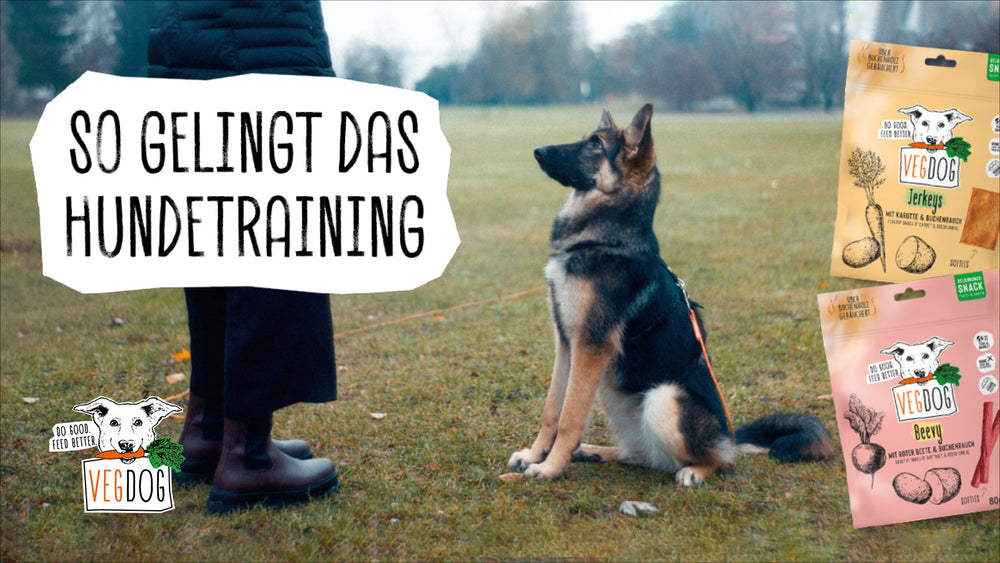
SO GELINGT DAS HUNDETRAINING

HOW DOG TRAINING WORKS

Growing together, a secure bond, variety - dog training is about more than "just" obedience.

To help you and your dog achieve the success you want, we have valuable tips for successful training with your four-legged friend.
Reading time: 10min
Alena ThielertFrom: Alena Thielert
Carla SteffenChecked: Carla Steffen
Modified: 01.10.2024
Published: 03.04.2024

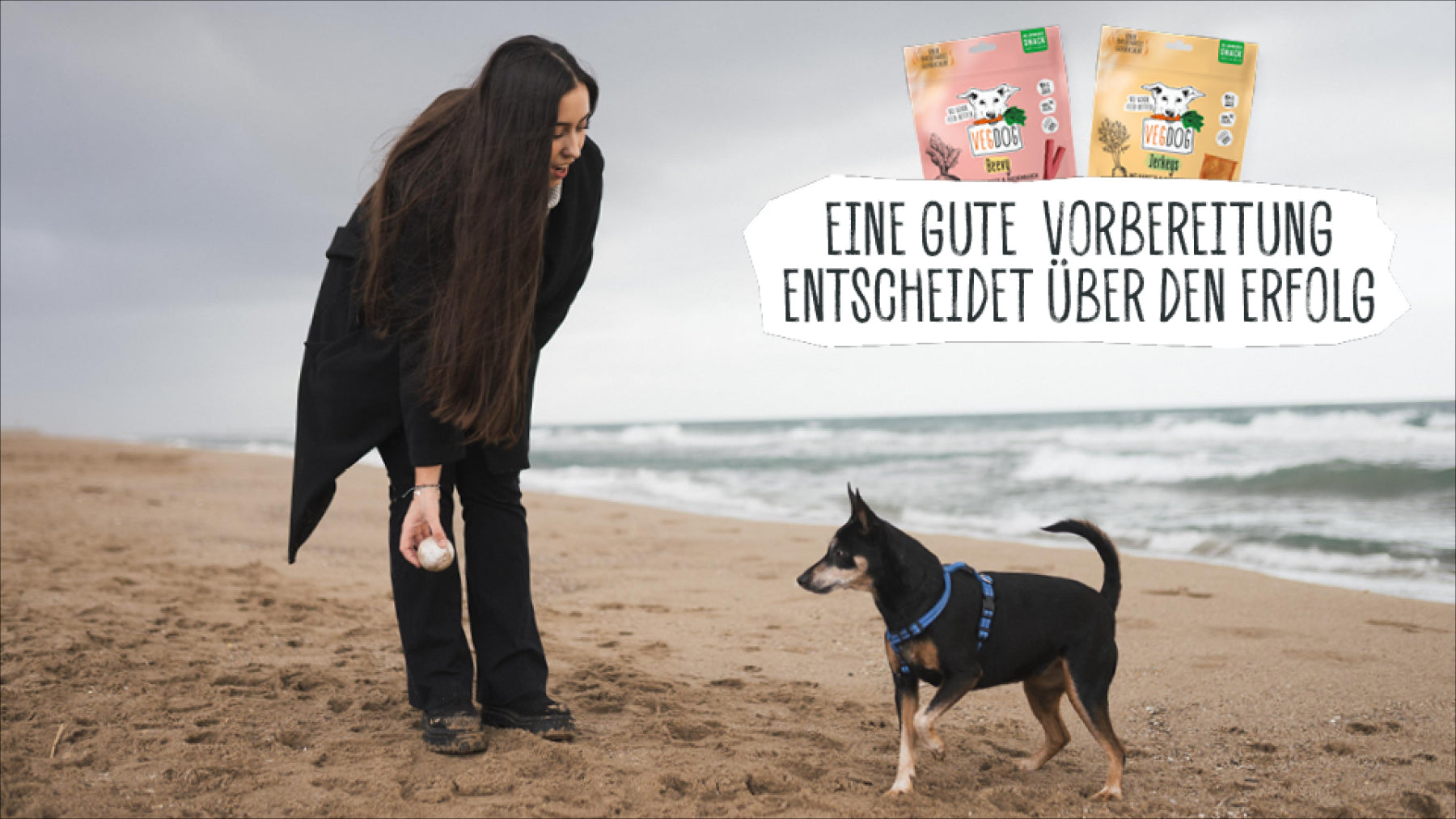
Before training your dog, it is important that the"setting"is right.

This includes making sure you have therewardthat is right for your dog. Does he prefer to be rewarded with atoyrather than a snack? Then pack his favorite toy. Will he do anything for treats? Then these are a must. By the way: Our absolutejackpot snacksBEEVYS and JERKEYS are particularly good for training. Their special aroma, which is created simply by smoking them over beech wood, will turn any dog's nose upside down! Try them now and see if your dog becomes a model pupil too

It doesn't always have to be snacks either: Yourcheerful voiceand a cheerful response can also be a reward for your dog.

In addition, yourown moodis important: Are you in a good mood and motivated? Your dog will notice that too!

Theenvironmentalso counts and must be adapted to the training situation or the training goal. For example: How strong the distraction may or should be.

It is also important that you yourself are informed about the training structure and steps.

It is essential that you avoid using your dog's name as a command. For example, if you want to recall your dog, use the appropriate command instead of calling your dog's name repeatedly.

Hours of dog training? No way! Short and crisp is more effective, as this allows the dog to stay focused, is not overtaxed and does not tire during training.

This way, an exercise remains exciting and the dog is motivated to repeat it during the next training session.

A possible training rhythm:

  • 1-2 minutes of training
  • 1-2 minute break
  • 1-2 minutes of training

Either you take another break afterwards or you end the training already. You should make sure that you train for a total of 5-10 minutes (including breaks).

Of course, the appropriate training rhythm is very individual and the right duration depends heavily on the respective dog: how strenuous is the exercise? How much fun is your dog having? What experience does he have?

Even if it is sometimes difficult and ambition drives you on:Take breaks!These are often underestimated. But they are particularly important! Because it is precisely during these breaks that training success is often greatest. The brain needs this time to process thetraining. This allows you to use the so-called learning curve most effectively. This is because after the learning curve rises following a training success, it drops slightly during processing. This allows it to level off at a stable level once the training goal has been achieved. The better you know your dog, the easier it will be for you to train in line with the learning curve.

Large breaksare also very effective in training: when you start a new exercise with your dog, practise it for two or three days in a row and then not at all for a few days. You will see: your dog will be highly motivated as soon as the training continues.

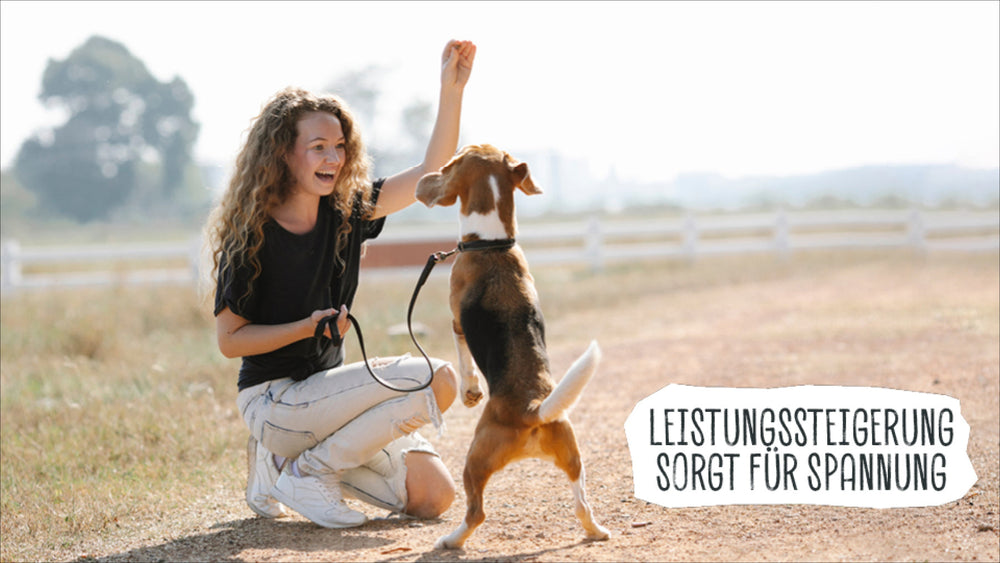
You can keep the tension in training by continuously increasing thelevel of difficulty of an exercise.It is important, however, that this increase takes place in small steps so that you do not overtax your dog.The most important thing: have fun training together.

To integrate even more success and joy into your life with your dog, we have seven golden rules for you:

1. LIVE WITH YOUR DOG AT EYE LEVEL
It is not crucial that you let the alpha dog hang out and make it clear to your dog that he is subordinate to you. As a rule, the dog is a member of the family. The important thing is that you give your dog a sense of security and accompany him responsibly through the world.

2. RESPECT YOUR DOG
Your dog is a living being with its own character that needs to be taken into account. As with humans, this is characterized by emotions, experiences and their own motivations. Take this into account during training.

3. CELEBRATE YOUR DOG'S SUCCESSES
Positive reinforcement increases training success. After all, we know from ourselves that there is a celebration at the end of training, for example. Your dog will also be happy if you give special recognition to big and small achievements.

4. UNDERSTAND YOUR DOG
Training is much easier if you know and understand your dog. Pay attention to his body language, read his emotions and respond to them. Specialist literature provides a good basis for basic understanding.

5. DON'T PLAY TO YOUR DOG
Dogs are very sensitive to people's emotions. If you're not feeling well, your dog will notice. Dogs can also read our body language very well. If our words and our body language contradict each other, our dogs will notice. So be honest with your dog and show him how you are feeling.

6. RESPOND TO YOUR DOG'S NEEDS
Dogs have their own individual needs, just like us humans. These include the basic needs for food, water and a safe place to sleep, but also go beyond that: they need social contact, exercise, safety and much more. Of course, this varies from dog to dog. Get to know your dog and give him what he needs.

7. DO NOT UNDERESTIMATE YOUR DOGIt has been scientifically proven that dogs have enormous cognitive abilities. They can learn quickly and use a variety of strategies. We wish you and your furry friend lots of fun and success in training!

Alena Thielert Alena Thielert

My dog Negrutu and I joined the VEGDOG pack in October 2020. I can now use my degree in environmental protection and experience from various activities in environmental and animal protection for the newsletter, YouTube channel, PR and blog.

Back to the blog