In this blog on obesity in dogs, you learned how obesity can occur. You can find out what measures can be taken to reduce your dog's weight here.
Reading time: 8min
From: Lisa Walther
Checked: Carla S.
Modified: 01.10.2024
Published: 15.07.2022
The math is actually quite simple: if your dog is too fat, hetakes up too much energy. You should remember that, unlike muscle, fatty tissue does not help to increase metabolic activity. The logical consequence is therefore to reduce the energy intake to such an extent that the dog loses weight. That sounds banal, but we know from experience how difficult it is and many a languishing dog's gaze has made us soften too.
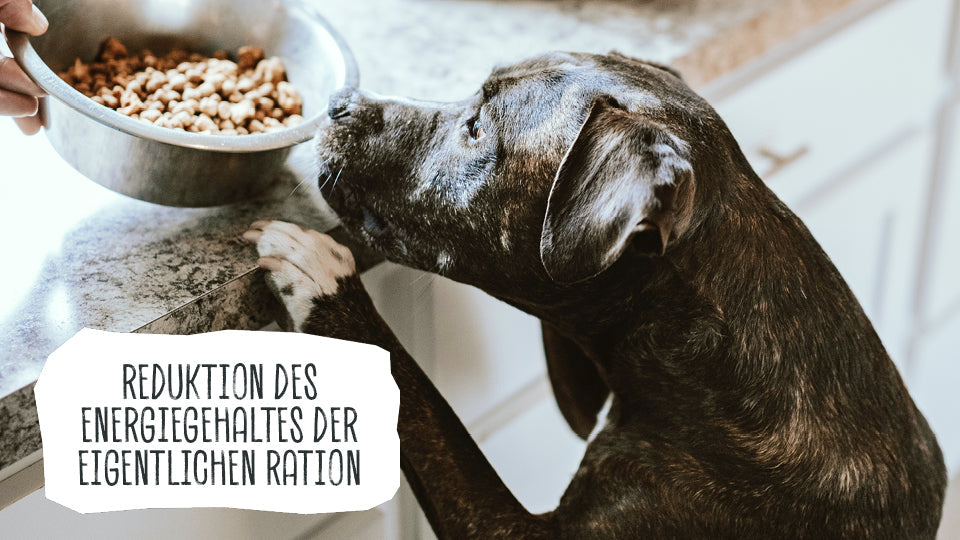
Just like us humans, your dog should not lose weight too quickly. As a guideline, you can expect1.5 % of body mass/week(maximum 2 %). To ensure this, the energy density of the ration must be reduced to60 % of the maintenance requirement of the target weight. However, it is not advisable to simply reduce the amount of feed currently used. This reduces energy intake, but also thesupply of important minerals, vitamins and, above all, protein.For this reason, there are so-called "reduction diets" - diets that are specially adapted to the needs of dogs that need to lose weight. These reduction diets have a lower calorie content, but are also rich in nutrients and protein. Your veterinarian or specialized veterinarian for animal nutrition will be happy to help you put together asuitable feeding plan
Most dog owners are not prepared to completely remove rewards from their dog's diet when they are on a reduction diet. This is not necessary, but you should always be aware of the energy content of treats: Dried rumen, pig's ears or even rice cakes have a high energy density due to their low water content, so alternative food rewards are often cheaper in terms of energy.
Depending on your dog's taste preferences, you can z.B. Chop up cucumbers, carrots or apples. Some dogs also love strawberries, blueberries or mandarins, for example. If your dog is not a fan of fruit or vegetables, you can also boil pasta or potatoes until soft and feed them in small quantities as a treat.
Cellulose as a weight loss aid for morbid obesity
The tasteless cellulose is made from deciduous trees and is an excellent source of crude fiber. Cellulose reduces the digestibility of carbohydrates and the retention time of the feed pulp in the intestine is shortened, so that less energy is absorbed overall.
Fiber should be acclimatized over several days and the daily dose should be divided into the number of daily portions. When administering dry food, the powder should be mixed with a little water or soy yogurt. Please discuss the administration and dosage of cellulose with your veterinarian, as the administration of fibers could be counterproductive in some gastrointestinal diseases.
Vegetables If your dog is so hungry with the reduced amount of food that you can hardly resist giving him a little more than planned, it is advisable to mix vegetables into the ration. Some varieties are tolerated raw (z.B. lettuce or cucumber), other varieties are better cooked (z.B. broccoli, fennel). However, avoid corn, peas and beans, which have a relatively high starch content and therefore a higher energy content than other varieties.
Exercise In addition to reducing the amount of energy given, you should also make sure that your dog gets plenty of exercise. Water sports are particularly recommended for overweight animals, as they are easy on the joints and are great fun for many dogs.
Create a weight curveTo get a better overview of your dog's weight development, it makes sense to weigh your dog regularly (once a week) and enter the weight in a table with the axes "kg" and "week". Remember: your dog should lose a maximum of 2% weight per week.
In general, we recommend seeking advice from a vet if you are planning to lose weight, as a sufficient supply of protein, vitamins, minerals and trace elements should be ensured to ensure healthy weight loss.
Our vets Carla and Veronika will also be happy to answer any questions you may have on tierarzt@vegdog.de zur .
Share
Lisa Walther
I started my career at VEGDOG in 2015 as a veterinary specialist for vegan dog nutrition. Today, I advise numerous pet owners on all topics relating to the plant-based feeding of their pets. I also give specialist lectures to vets so that my colleagues become more open to this important topic.




 Lisa Walther