
WHAT ARE THE HEALTH BENEFITS OF A VEGAN DIET?
Is vegan really better? Many dog owners who feed their dog a partially vegan or completely vegan diet or are thinking about switching to a vegan diet are certainly asking themselves this question. We present the health benefits!

3 Vorteile der veganen Hundeernährung
Das Wichtigste im Überblick:
- Vegane Ernährung von Hunden reduziert nicht nur Tierleid, sondern ist auch umweltschonend
- Hunde sind keine reinen Karnivore und können mittlerweile auch Stärke und Kohlenhydrate gut verdauen
- Vegane Hundeernährung ist gesund und ist zusätzlich eine Alternative bei Futtermittelallergien

1.Reduzierung von Tierleid
Es gibt viele Gründe, wieso der Wechsel zu einer veganen Ernährung gut und wichtig ist. In Sachen Umwelt und Ethik ist klar: Ja, vegan ist besser! Es kommt zu weniger Tierleid, denn ein vegan lebender Hund (15 kg) rettet pro Jahr im Schnitt 100 Hühnern das Leben. Viele Hersteller werben damit, dass sie „reines Muskelfleisch“ in ihrem Futter verwenden und auch der Anteil an Fleisch in den meisten Futtersorten ist deutlich höher als eigentlich notwendig. Für diese enormen Mengen an qualitativ hochwertigem Fleisch, das nicht in der Lebensmittelkette landet, müssen zwangsläufig sogenannte "Nutztiere" nur für die Tierfutterindustrie geschlachtet werden.
2. Umweltfreundlichkeit
Es wird außerdem weniger CO2 ausgestoßen als beim Halten von Tieren, die der Futtermittelherstellung dienen. Mit einer Packung unserer BEEVYS oder JERKEYS sparst du beispielsweise 850 g CO2 – das entspricht einer Autofahrt von 5 km!
Zum anderen wird weniger Landfläche gebraucht, da viele Ackerflächen für den Anbau von Futterpflanzen für “Nutztiere” beansprucht werden. Dies macht veganes Futter wiederum ressourcenschonend. Die Liste ließe sich noch fortführen. Doch wie sieht es mit der Gesundheit aus? Bringt eine vegane Ernährung dem Hund Vorteile und wenn ja, welche?
Exkurs: Studienlage zum Thema hundegerechte Ernährung
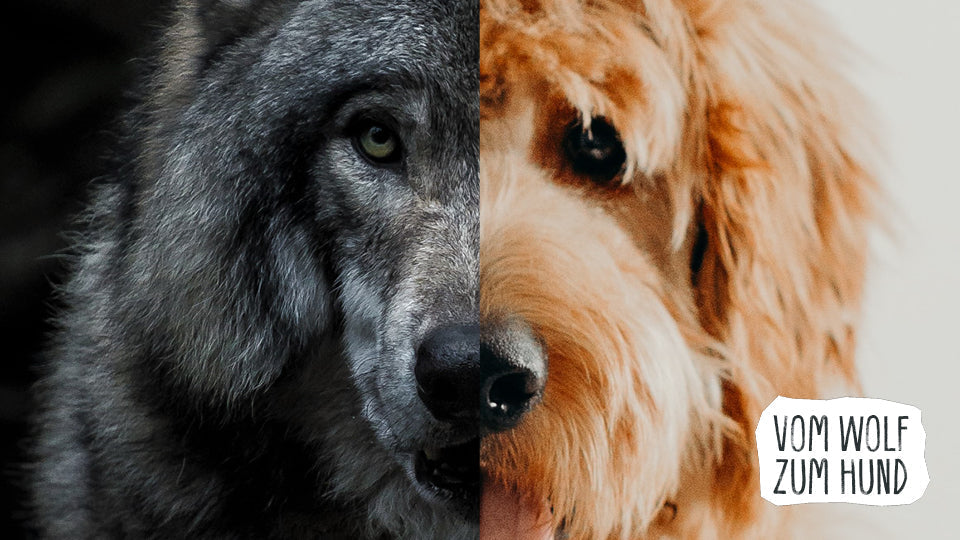
Die meisten Menschen schrecken bei dem Gedanken, einen Hund vegan zu ernähren, zunächst zurück: “Das kann doch nicht gesund sein! Der Hund stammt doch vom Wolf ab! Der Hund braucht Fleisch, er ist ein Karnivor – also ein reiner Fleischfresser.” Das stimmt allerdings nicht ganz. Ja, der Hund stammt ursprünglich vom Wolf ab, aber ein Karnivor ist er schon lange nicht mehr [1]. Auch ist er dem Wolf in vielerlei Hinsicht nicht mehr sonderlich ähnlich.
Der Hund ist ein domestiziertes Haustier. Bereits vor ca. 15.000 Jahren haben die Menschen begonnen, Hunde zu halten. Im Laufe dieser Zeit haben sich die Anatomie sowie die Ernährungsphysiologie stark gewandelt [2]. Der Hund hat sich von einem wilden Raubtier zu einem verschmusten, zutraulichen Allesfresser entwickelt.
Wirft man einen Blick in die Fachliteratur, so sieht man, dass dort der Hund schon länger nicht mehr als Karnivor, sondern als Omnivor – also als ein Allesfresser bezeichnet wird [3].
Dies zeigt sich beispielsweise daran, dass der Verdauungstrakt des Hundes nun in der Lage ist, Stärke und Kohlenhydrate hervorragend zu verdauen.

Unsere Topseller



3. Veganes Hundefutter ist gesund!
Nun lautet die Frage aber: Ist vegan wirklich besser? Wirklich gesünder?
Wir sind überzeugt: Veganes Hundefutter kann alles, was fleischhaltiges Hundefutter auch kann! Vegan ist also genauso gesund und bedarfsdeckend für den Hund wie eine fleischhaltige Ernährung. Die Aussage, ob ein Futter gesünder oder ungesund ist, kann so aber pauschal nicht getroffen werden. Jede Ernährungsweise kann gesund sein, solange die Zusammensetzung stimmt und sichergestellt werden kann, dass der Hund mit allen wichtigen Nährstoffen versorgt wird. Ein gutes bzw. gesundes Futter muss also in allererster Instanz bedarfsdeckend sein, unabhängig von den Inhaltsstoffen. Die Bedarfsdeckung unserer Alleinfuttermittel hat für uns neben der Produktqualität höchste Priorität!
Wir bei VEGDOG sehen allerdings zusätzlich die ethischen Vorteile, die eine vegane Ernährung mit sich bringt und finden deshalb, dass vegan der richtige Weg ist. Jeder Schritt ist hierbei wichtig: Auch die Reduktion tierischer Inhaltsstoffe leistet bereits Großes.
Ob gesünder oder nicht, gesundheitliche Vorteile bringt eine vegane Ernährung alle Male!
Diese sind zum einen, dass mit einer veganen Ernährung die meisten Hauptallergene [4] für Hunde eliminiert werden. Dazu zählt vor allem tierisches Eiweiß. Somit ist ein veganes Futter eine hervorragende Alternative für Futtermittelallergiker.
Zum anderen enthält veganes Futter deutlich mehr sekundärePflanzenstoffe wie Polyphenole, denn diese kommen ausschließlich in Pflanzen vor. Sie können sich positiv auf das Immunsystem auswirken und sind entzündungshemmend und antioxidativ[5].
Pflanzliche Öle, vor allem Algen- und Leinöl, sind reich an Omega-3-Fettsäuren. Selbst Fisch, der bekanntlich ein Omega-3-Fettsäurespender ist, bezieht diese durch seine Nahrung – die Alge. Omega-3-Fettsäuren haben ebenfalls positive Auswirkungen auf das Immunsystem, sie wirken außerdem entzündungsregulierendund unterstützen den Zellaufbau. Öle wie Hanf- oder Sonnenblumenöl liefern wertvolle Omega-6-Fettsäuren, die beispielsweise die Hautbarriere unterstützen. Zudem enthalten pflanzliche Produkte meist höhere Anteilean ungesättigten Fettsäuren, während tierische Fette in der Regel reicher an gesättigten Fettsäuren sind.
In unserem Produktsortiment spenden unsere Ölmischung das "VISH OIL“, sowie unsere Snacks „VEGGIES skincare“ deinem Vierbeiner wertvolle Omega-3- und -6-Fettsäuren.
In Anbetracht der Klimakrise, des exorbitanten Anteils der landwirtschaftlichen Tierhaltung an den globalen Emissionen und der Ressourcenknappheit müssen alternative Proteinquellen an Bedeutung gewinnen.[6] Wir sollten uns klarmachen:
Gesunde, vegane Hunde – der Umwelt und den Tieren zuliebe.
FAQ
Nein, in Deutschland gibt es kein Verbot von veganer Hundeernährung. Jedoch muss die Fellnase nach dem Gesetz alle benötigten Nährstoffe bekommen. Wir bei VEGDOG entwickeln unser Hundefutter zusammen mit Tierärzten und Tierärztinnen, sodass wir ein qualitativ hochwertiges Futter, wie dasGREEN CRUNCHanbieten können.
Am sinnvollsten ist es immer, sich einen tierärztlichen Rat einzuholen, besonders, wenn das vegane Futter selber zusammengestellt wird. So kann eine ausgewogene Ernährung gewährleistet werden.
Grundsätzlich gibt es viele verschiedene vegane Rezepte, die du deiner Fellnase zuhause selber zubereiten kannst. Dabei ist es sehr wichtig, dass diese Rezepte rechnerisch überprüft worden sind. Wir haben dirhierein proteinreiches veganes Rezept zusammengestellt.
QUELLEN:
1.& 2. Driscoll, C.A., Macdonald, D.W. Top dogs: wolf domestication and wealth. J Biol 9, 10 (2010). https://doi.org/10.1186/jbiol226
3. NRC: National Research Council. 2006. Nutrient Requirements of Dogs and Cats. Washington, DC
4. Mueller, R.S., Olivry, T. & Prélaud, P. Critically appraised topic on adverse food reactions of companion animals (2): common food allergen sources in dogs and cats. BMC Vet Res12, 9 (2016).
5. Sgorlon S, Stefanon B, Sandri M, Colitti M. Nutrigenomic activity of plant derived compounds in health and disease: Results of a dietary intervention study in dog. Res Vet Sci. 2016 Dec;109:142-148. doi: 10.1016/j.rvsc.2016.10.005. Epub 2016 Oct 13. PMID: 27892863. Und Tanprasertsuk J, Tate DE, Shmalberg J. Roles of plant-based ingredients and phytonutrients in canine nutrition and health. J Anim Physiol Anim Nutr (Berl). 2022 May;106(3):586-613. doi: 10.1111/jpn.13626. Epub 2021 Sep 8. PMID: 34495560; PMCID: PMC9291198.
6. Thavamani, A., Sferra, T.J. & Sankararaman, S. Meet the Meat Alternatives: The Value of Alternative Protein Sources. Curr Nutr Rep 9, 346–355 (2020).