Share
 Carla S.
Meine Mission bei VEGDOG ist, bei der Entwicklung von Produkten mitzuwirken, die
sowohl unsere geliebten Hunde mit allem versorgen, was sie benötigen, als auch einen Beitrag zum Tier- und Umweltschutz leisten.
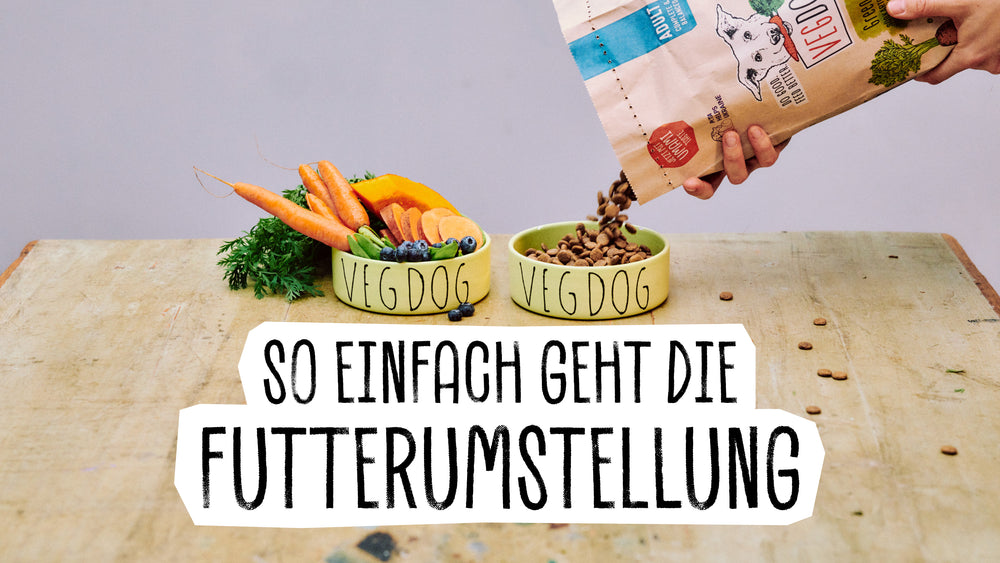
Does your furry friend have health problems or do you simply want to improve your four-legged friend's quality of life? A change of food can be the solution! In the following, we'll tell you what you should bear in mind when switching food.
In this article you will learn:
 From: Carla Steffen
 Checked: Veronika H.
Most four-legged friends can hardly wait to pounce on their food and fill their bellies. However, if this is not the case, most people think that the problem is solved with a change of food. However, food should not be constantly changed without good reason, as this can lead to intolerances and allergies that are difficult to control. So if your dog dislikes his food, first think about what could be the reason and try to find the cause. A visit to the vet or a visit to a behavioral therapist can often help to motivate your four-legged friend to eat. In the following cases, we recommend a change of food, ideally after consultation with a vet:
How to change the food best, you will find out in this article!
Our furry friends are as different as we humans are. Some dogs have surprisingly few problems with a sudden change of food, while others have a particularly sensitive gastrointestinal tract and react with digestive problems. The new food could therefore literally upset your pet's stomach. To avoid this as much as possible, we recommend a slow change of food for dogs. Start by feeding your dog their usual food, replacing a small amount with our VEGDOG dog food. Over time, increase the amount of the new food until your pet receives the full ration.
Take three weeks and gradually increase the amount of plant-based food - see the illustration below. This will give your dog's intestinal flora time to adjust to the new diet. If your pelt-nose is very sensitive or the food was previously particularly meat-heavy, take at least four weeks. And if you have any questions about the changeover, please contact us at tierarzt@vegdog.de.
You can also watch the video of our VEGDOC Carla, in which she talks about the food changeover:


And once the feed has been changed correctly, the next question is how to calculate the ration correctly. Our VEGDOC Carla also has an answer to this question:
Some pets first have to get used to the new food composition, which is why they may experience digestive problems at the beginning of the food change. This is completely normal and not a cause for concern at first. During the change of food, the amount and consistency of the feces may change.
It is not uncommon for the amount of feces to increase and the consistency to be softer than usual. In some cases, diarrhea may even occur. Slight flatulence can also occur as a side effect. However, all these symptoms should subside quickly. After four weeks at the latest, your four-legged friend's digestive tract should have recovered and become fully accustomed to the new food. We give you an overview of the side effects that can occur due to food changes and which ones you should seek veterinary advice for:
Itching is a symptom that your pet cannot tolerate either the old or the new food. Food allergies can be the trigger. If you switch to a hypoallergenic food such as SENSITIVE LUPINE PROTEIN from VEGDOG , you should see an improvement after four to six weeks. If the itching is still present, an elimination diet could be considered.
Diarrhea can be the result of a change of food. Make sure that the diarrhea does not last longer than 5 days. If the diarrhea lasts longer, you should seek veterinary advice and stop the change if necessary.
Vomiting should not occur when changing food. If this is the case, then the food was changed very abruptly or the dog is particularly sensitive to food. If your dog vomits several times, it is best to consult a vet. Vomiting can not only be a symptom of an intolerance, but can have many other causes that should be clarified.
Bloating can occur due to food changes, as our four-legged friends first have to get used to the new composition of the food. However, this should subside after a few days at the latest.
As the intestines first have to adjust to the new food, mucus may appear in the stools during the first few days. As with the other symptoms, the same applies here: If your furry friend continues to defecate with mucus, you should consult a vet. However, small amounts of mucus in the feces are normal, as mucus glands in the stomach and intestines produce a secretion so that the food can be better digested and transported.
Blood in the feces is a sign of an inflammatory process in the gastrointestinal tract and should always be treated as an emergency. At best, it may indicate that your pet cannot tolerate the new food. However, blood in the stool can also have very serious causes such as tumors or ulcers, which is why a veterinary practice should be consulted immediately.
When switching from dry to wet food, your four-legged friend absorbs more water. This can lead to your furry friend having to pee more often. If they pee more than average, a bacterial infection, bladder stones or another underlying disease should be checked by a vet.
Puppies should be fed three to four times a day shortly after weaning from their mother. After six to twelve months (depending on the breed), this can be reduced to two to three meals a day.
Puppy food should be fed for up to one year. From the age of 13 months, a change to adult food should be made. The changeover can take up to ten days. The difference between puppy and adult food lies particularly in the mineral content, as puppies need more minerals such as calcium and phosphorus during the growth phase. It is therefore extremely important that puppies are fed a suitable puppy food during the growth phase, as otherwise this can lead to serious growth disorders.
If you switch from wet to dry food, you should make sure that your furry friend is drinking enough liquid. Wet food has a significantly higher water content, which is why your dog will need to drink more with dry food. Therefore, always provide fresh water. To make the transition easier for your four-legged friend, you can also soak the dry food in warm water.
Wet food is very popular with many pets. As it has a more intense smell than dry food, it can motivate even picky dogs to eat it. It is therefore not uncommon for dog owners to switch from dry to wet food.
However, not only picky eaters can benefit from such a change of food, but also dogs that drink little, as well as seniors who suffer from dental problems. Changing the type of food can therefore make a lot of sense. However, please note that your dog may pee a lot as a result of this change of food, as the wet food causes him to drink more water.
Most four-legged friends can hardly wait to pounce on their food and fill their bellies. We also recommend a change of food in the following cases
The ingredients in a high-quality dog food have a particular effect on your four-legged friend's skin and coat. If your furry friend previously had a dull and brittle coat, it should shine again after a few weeks. Your four-legged friend's digestion should also be working smoothly again. The consistency of their stools should now be within the normal range, while bloating should be a thing of the past.
We at VEGDOG work with our food like GREEN CRUNCH completely without artificial flavors or attractants. To make the transition to VEGDOG really tasty for fussy dogs, here are a few professional tips from our vet:

There are lots of really good reasons to feed your dog a plant-based diet with VEGDOG . One of them is health! Because our food is highly digestible, hypoallergenic and of the highest quality. It contains a perfectly balanced nutrient profile with alternative proteins and fatty acids - developed (and celebrated) by specialist vets.
Join us and try vegan!
Dogs should change their diet slowly and gradually. A period of three to four weeks is ideal.
If your dog is already suffering from digestive or skin problems before the change of food, an improvement can occur as early as four weeks after the change of food if the food is of high quality.
If the dog's food is changed too quickly, this can lead to gastrointestinal problems. These include a change in stool consistency, diarrhea and flatulence.
Carla S.