Vorsicht, giftige Pilze: So schützt du deinen Hund

Caution, poisonous mushrooms: how to protect your dog

When the mushrooms sprout in autumn and the walkway smells of damp earth, our four-legged friends' curiosity also increases. But this is exactly where the dangers lurk: Between the leaves and moss, harmless mushrooms stand close to dangerous doppelgangers, where even a small bite can have serious consequences. Below you can find out how to reduce the risk of mushroom poisoning and what to do in an emergency.

Reading time: 4min
Alena ThielertFrom: Alena Thielert
Modified: 19.12.2025
Published: 19.12.2025

Are dogs allowed to eat mushrooms?

The short answer is: Better not. Even supposedly edible varieties can cause gastrointestinal problems in dogs. There is also an enormous risk of confusion with poisonous mushrooms. Some toxins also have a delayed effect and remain active despite heating. Therefore, it is better not to feed dogs mushrooms.

These dangerous mushrooms lurk in the forest and garden

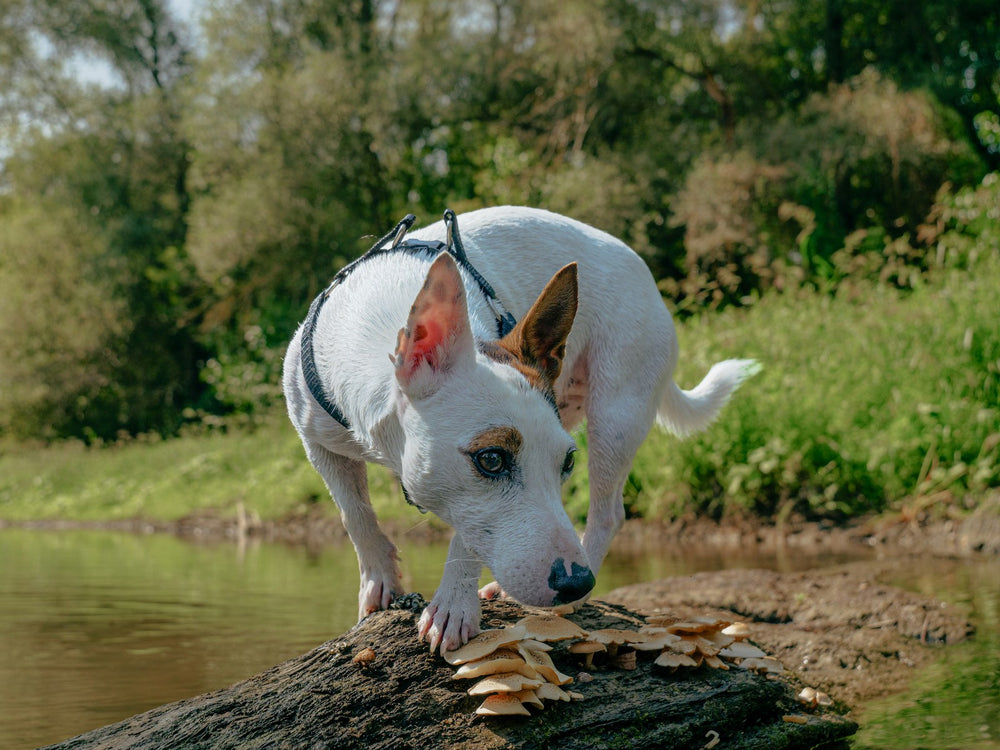
Mushrooms often grow between leaves, moss and in freshly mown lawns exactly where our dogs sniff curiously. Both in the forest and in your own garden, they can become a danger without you noticing. Some species are highly poisonous and can cause serious organ damage, which in the worst case can even be fatal.

Among the particularly dangerous mushrooms are:

  • Green toadstool: extremely poisonous; can cause severe liver failure
  • Red fly agaric: contains nerve toxins; cramps and neurological deficits are possible
  • Panther mushroom: similarly toxic as the fly agaric, with a clear effect on the nervous system
  • Spring lobelia: contains poisonous hydrazines; even small amounts are risky
  • Satans bolete (devil's mushroom): often leads to massive gastrointestinal complaints
  • Coniferous russula: considered highly poisonous and easy to confuse
  • Giant russula: one of the poisonous russulas, avoid at all costs
  • Tile red crack mushroom: belongs to the muscarine-rich mushrooms that are poisonous to dogs, often inconspicuous in appearance
  • species containing muscarine: can cause severe poisoning with profuse salivation, vomiting and circulatory problems

Recognizing symptoms of mushroom poisoning in dogs

Mushroom poisoning in dogs can look very different depending on the toxin. Common symptoms are:

  • Gastrointestinal symptoms (vomiting, diarrhea, abdominal pain, flatulence)
  • Strong salivation
  • Restlessness or apathy
  • Changed pupils (constricted or dilated depending on the toxin)
  • Shaking, Staggering and coordination disorders
  • seizures
  • Yellowish mucous membranes, dark urine, general weakness (indication of liver involvement)

Attention: Symptoms may start immediately - or hours later. Some poisons have a delayed effect, so that the dog initially appears inconspicuous but is still at risk. If in doubt, take any abnormality seriously and have it checked by a vet.

What should you do if your dog has eaten poisonous mushrooms?

If your dog has eaten a poisonous mushroom, every minute counts. Stay calm and follow our step-by-step guide:

  1. Call the vet & Drive off: Ring through briefly in advance and then drive directly to the practice or veterinary clinic. On the phone, describe your dog's weight, the time and estimated amount of ingestion as well as the first signs.
  2. Save samples: Put mushroom remains or vomit in a bag and take photos of the location - this makes it easier to determine the type of mushroom.
  3. No household remedies: Please do not induce vomiting in your four-legged friend yourself unless your vet tells you to. You should also only give activated charcoal if instructed to do so by your vet.

Fungal poisoning is an acute emergency. Early, professionally supervised steps such as controlled emptying of the stomach, binders and infusions can have a positive influence on the course and reduce complications. The faster the help, the better the chances.

Safely through the fall with our tips

In the fall, proactive management is the best way to protect your four-legged friend. Keep the garden mowed and regularly remove any mushrooms - a thorough check is particularly worthwhile after periods of rain.

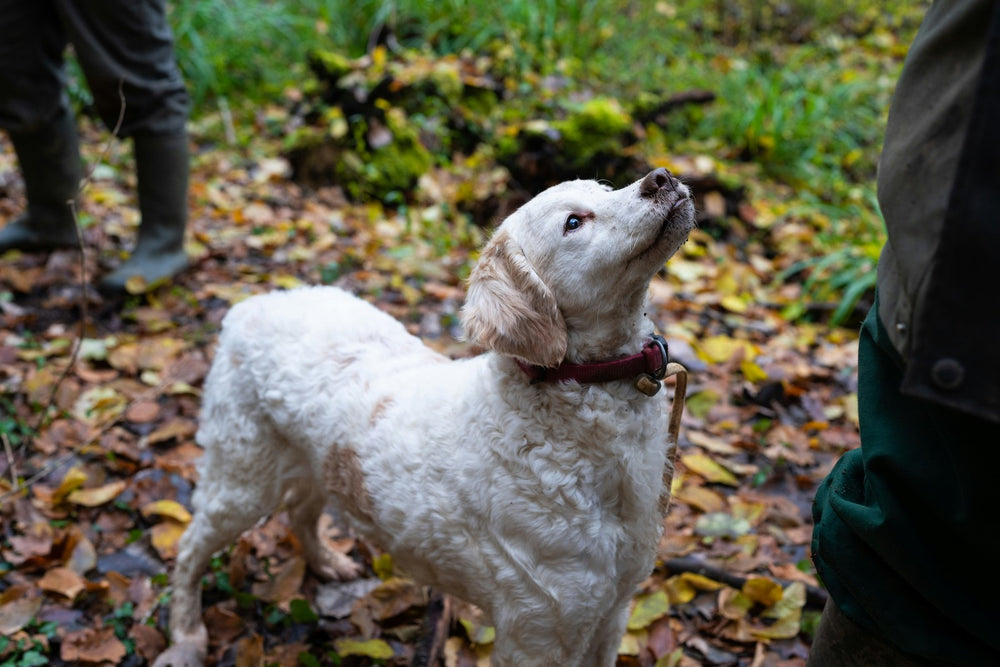
When going for a walk, it's better to choose firm paths and avoid typical mushroom hotspots such as damp carpets of leaves, moss and dead wood. Play it safe in the forest by keeping your furry friend on a lead. A well-fitting muzzle can also be helpful for notorious "vacuum cleaners". A reliable stop signal such as "off" and generous rewards for alternative behaviors help to prevent your dog from finding things interesting in the first place. It's best to use particularly tasty snacks like our irresistible BEEVYS and JERKEYS.

Alena Thielert Alena Thielert

My dog Negrutu and I joined the VEGDOG pack in October 2020. I can now use my degree in environmental protection and experience from various activities in environmental and animal protection for the newsletter, YouTube channel, PR and blog.

Back to the blog