Alternative protein sources for dogs with allergies
Reagiert dein Hund empfindlich auf Rind oder Huhn? Futtermittelallergien belasten viele Fellnasen, wobei oft tierische Eiweiße die Auslöser sind (Müller et al. 2016). Aber keine Sorge: Es gibt wunderbare Alternativen, die deinen Schatz bestens versorgen. Wie pflanzliche Proteine die Gesundheit fördern können und worauf du bei der Auswahl achten solltest, erfährst du hier. Entdecke direkt unser Sortiment für sensible Hunde und finde die perfekte Lösung für deinen Napf.
Protein-Power: Warum Eiweiße für deinen Hund unverzichtbar sind
Proteine, auch Eiweiße genannt, sind essenzielle Nährstoffe in der Hundeernährung und daher besonders wichtig für die Gesundheit deines Vierbeiners. Eiweiße bestehen aus Aminosäuren, die vielfältige Funktionen im Körper erfüllen. Sie dienen nicht nur als Energielieferant, sondern dienen vor allem dem Muskelaufbau und der Neubildung von Körpergewebe wie auch Immunzellen.
Des Weiteren sind Proteine an zahlreichen Stoffwechselprozessen beteiligt und tragen maßgeblich zur Aufrechterhaltung des Immunsystems bei. Außerdem sind Eiweiße an der Bildung von Keratin beteiligt, was wiederum für eine intakte Haut und schönes Fell sorgt. Alles in allem benötigt dein Hund Proteine, um seine Körperfunktionen aufrechtzuerhalten. Eine hohe Verträglichkeit der Proteinquellen ist dabei für das Wohlbefinden entscheidend.
Hochwertige Eiweiße im Hundefutter
Für eine ausgewogene Ernährung ist es wichtig, dass das Hundefutter hochwertige Eiweiße enthält. Diese bieten eine hohe biologische Wertigkeit, das heißt, sie werden besonders gut von deiner Fellnase verwertet.
Biologische Wertigkeit der Proteinquellen
Hochwertige Proteine für Hunde können auch pflanzlichen Ursprungs sein. Pflanzliche Proteine bieten zudem den Vorteil, dass sie mit Ausnahme von z. B. Soja nicht zu den typischen Hauptallergenen zählen (Müller et al. 2016). Bei manchen pflanzlichen Proteinquellen ist die biologische Wertigkeit oft etwas geringer. Das ist aber kein Problem: Mit dem richtigen Know-how, wird durch gezielte Kombination verschiedener Proteinquellen die biologische Wertigkeit wesentlich erhöht und dadurch wieder optimal.
Kombination für ein optimales Aminosäureprofil
Im Grunde benötigt ein Hund 21 Aminosäuren, von denen 10 als essenziell gelten. Diese 10 kann der Hund nicht selbst herstellen. Sie müssen daher über die Nahrung aufgenommen werden. Tierische Proteine enthalten alle essenziellen Aminosäuren, während bei den pflanzlichen Eiweißen einige nur gering, also limitierend, enthalten sein können. Um alle Aminosäuren abzudecken, empfiehlt es sich daher, mehrere pflanzliche Proteinquellen gezielt miteinander zu kombinieren.
Praktische Lösungen für den Alltag
Fertiges, veganes Hundefutter bietet in der Regel ein optimales Profil. Wenn du jedoch für deinen Liebling selbst den Kochlöffel schwingen möchtest, sind Supplemente wie unser All-In Veluxe eine ideale Ergänzung, um deinen Vierbeiner neben wichtigen Mineralien und Vitaminen auch mit kritischen Aminosäuren zu versorgen. Hier gilt aber immer: Selbstgekochte Rationen müssen von Professionist:innen kalkuliert und zusammengestellt werden, damit diese auch wirklich bedarfsdeckend sind.
Tipp: Wenn du deiner Fellnase selbst ein schmackhaftes Menü zaubern möchtest, empfehlen wir dir unser bedarfsdeckendes Rezept „Proteine im Napf“.
Die besten pflanzlichen Proteinquellen für deinen Hund
Wer tierische Eiweiße gänzlich ausschließen möchte, kann auf pflanzliche Proteine zurückgreifen. Diese eignen sich besonders für Hunde mit Futtermittelallergien, aber auch gesunde Hunde können gut und gerne damit gefüttert werden. Protein aus folgenden pflanzlichen Quellen wird gerne genutzt:
VEGDOG: 100 % bedarfsdeckendes Hundefutter auf pflanzlicher Basis
Wir von VEGDOG haben gemeinsam mit Tierärztinnen ein rein pflanzliches Hundefutter entwickelt, das 100 % bedarfsdeckend ist. Es schließt die Hauptallergene des Hundes aus und ist vollgepackt mit hochwertigen und leckeren Zutaten. In unserer Trockenfuttersorte Green Crunch verwenden wir Erbsen und Linsen als pflanzliche Proteinquelle.
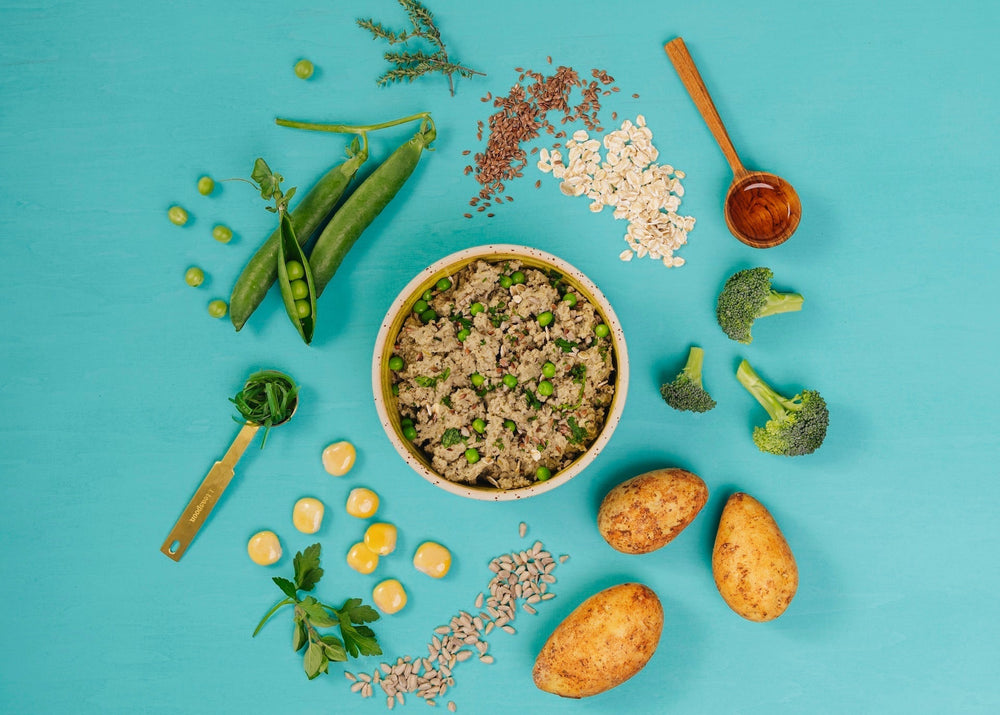
Unsere NassfuttersorteSensitive enthält hingegen Linsen und Lupinen. Neben diesen Sorten haben wir noch viele weitere im Sortiment, die mit einer erstklassigen Proteinversorgung punkten können. Entdecke auch du unser veganes Hundefutter und biete deinem Hund eine pflanzliche und bedarfsdeckende Ernährung!
Weitere Informationen zu unseren Inhaltsstoffen findest du in unserem Ratgeber.
Proteinbedarf beim Hund: Wie viel Eiweiß ist gesund?
Eine ausgewogene Nährstoffversorgung ist essenziell, da sowohl ein Proteinmangel als auch ein Proteinüberschuss zu gesundheitlichen Problemen führen kann. Erhält dein Hund zu viel Protein, können beispielsweise die Nieren auf Dauer überlastet werden. Bei Nierenerkrankungen ist neben der Phosphor Restriktion daher auch ein Hundefutter mit moderat aber hoch verdaulichen Protein ratsam.
Der Proteinbedarf deines Hundes hängt von Faktoren wie Alter, Größe, Stoffwechsel und Aktivitätslevel ab – daher dienen die folgenden Infos nur als kleine Orientierungshilfe: Ein gesunder, adulter Hund sollte pro Kilogramm metabolischem Körpergewicht und Tag rund 4-5 g verdauliches Rohprotein erhalten. Der Proteingehalt von Trockenfutter liegt daher meist um die 24 % und beim Nassfutter um die 6 %. Welpen, trächtige Hündinnen und Senioren haben jedoch einen höheren Proteinbedarf.
Entdecke jetzt die Kraft pflanzlicher Proteine für deinen Hund
Bist du bereit, den Napf deines Lieblings mit Pflanzenpower zu füllen? Unsere Expertinnen-Rezepturen vereinen erstklassige pflanzliche Proteine mit einer optimalen Nährstoffbalance. So garantieren wir eine Bedarfsdeckung und versorgen deinen Hund zuverlässig mit allen wichtigen Aminosäuren und Vitaminen. Finde jetzt die ideale Sorte, die perfekt zu den Bedürfnissen deines Vierbeiners passt!
Mein Hund Negrutu und ich wurden im Oktober 2020 im VEGDOG-Rudel aufgenommen. Hier kann ich nun mein Studium der Umweltsicherung und Erfahrungen aus diversen Tätigkeiten im Umwelt- und Tierschutz für den Newsletter, den YouTube-Kanal, die PR und den Blog einsetzen.


 Alena
Alena