We all want the best for our dogs. Now that you've chosen our food, you're well on your way! But now the question remains: how do I store the food correctly to preserve its quality? In this article, we share important tips and advice on how to store the food correctly and explain why correct storage is crucial.
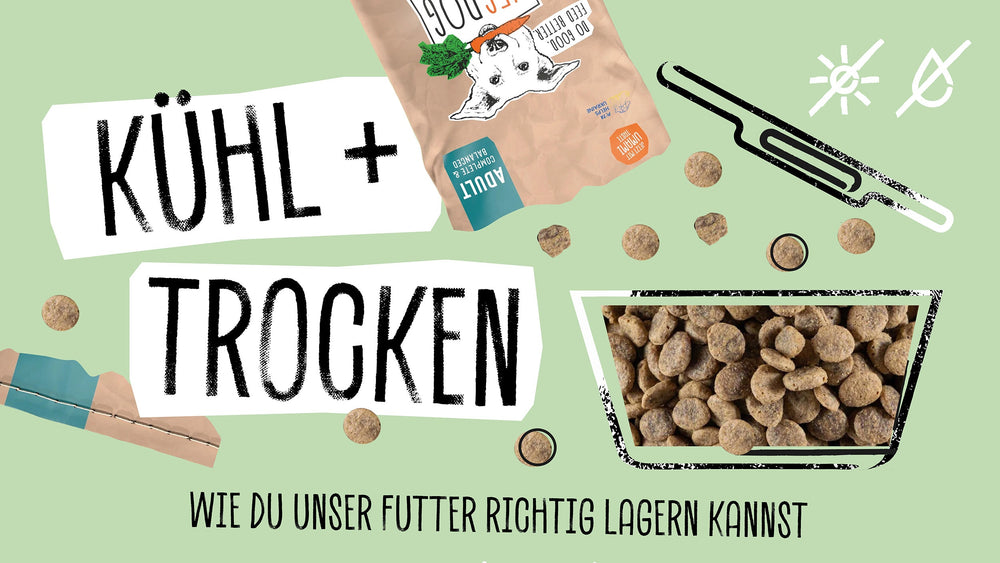
Egal, ob es sich um Nass- oder Trockenfutter handelt, eine Grundregel gilt immer: Hundefutter solltest du an einem kühlen und trockenen Ort lagern. Feuchtigkeit und Hitze können dazu führen, dass das Futter verdirbt und an Qualität verliert. Aus diesem Grund raten wir dazu, das Futter an einem Ort aufzubewahren, der vor direkter Sonneneinstrahlung und hoher Luftfeuchtigkeit geschützt ist.
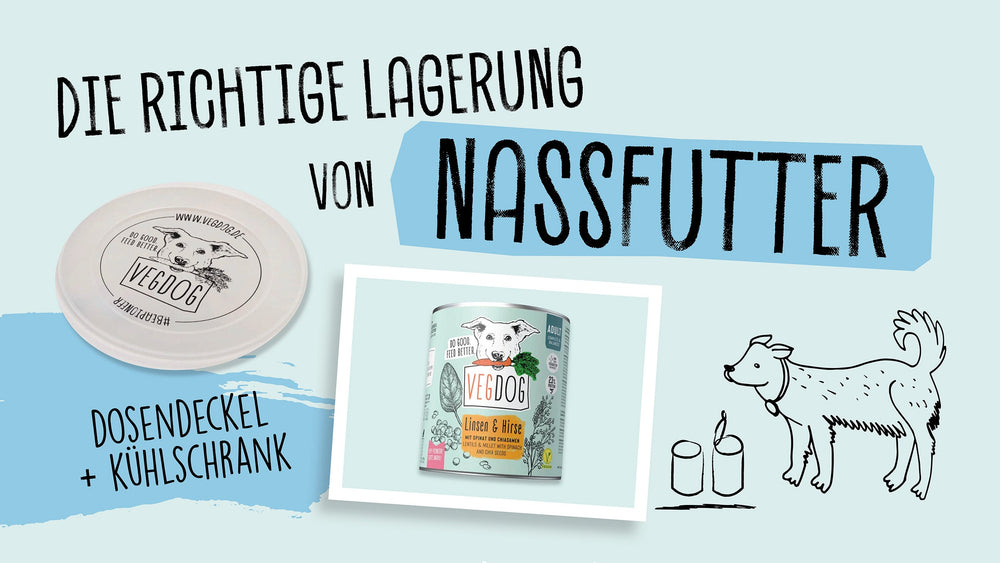
Unser Nassfutter ist besonders beliebt bei vielen Hunden. Öffnest du eine Dose oder ein Tetra Pak unseres Nassfutters, solltest du darauf achten, den Behälter wieder mit einem Deckel zu verschließen und ihn im Kühlschrank zu lagern. Auf diesem Weg ist das Futter 2-3 Tage haltbar.
RICHTIGE LAGERUNG VON TROCKENFUTTER
Unser Trockenfutter ist nicht nur praktisch, sondern auch länger haltbar. Dennoch ist auch hier die richtige Lagerung von großer Bedeutung. Sobald du einen Sack unseres Green Crunch oder Farmers Crunch öffnest, solltest du den Inhalt in eine luft- und lichtdichte Verpackung umfüllen. Hier bieten sich verschiedene Boxen an.
DAS MINDESTHALTBARKEITSDATUM (MHD)
Ein weiterer wichtiger Punkt bei der Lagerung von Hundefutter ist das Mindesthaltbarkeitsdatum (MHD). Nach Ablauf dieses Datums können wir keine Gewährleistung für die Qualität des Futters geben, insbesondere in Bezug auf den Vitamingehalt. Du kannst das Futter aber hier mit deinen eigenen Lebensmitteln vergleichen. Auch nach Ablauf des MHD kannst du einfach einen Frische-Check durchführen und dich auf deine Sinne verlassen. Sieht das Futter normal aus, hat eine normale Konsistenz und riecht nicht auffällig, kannst du es deinem Hund in der Regel bedenkenlos füttern.
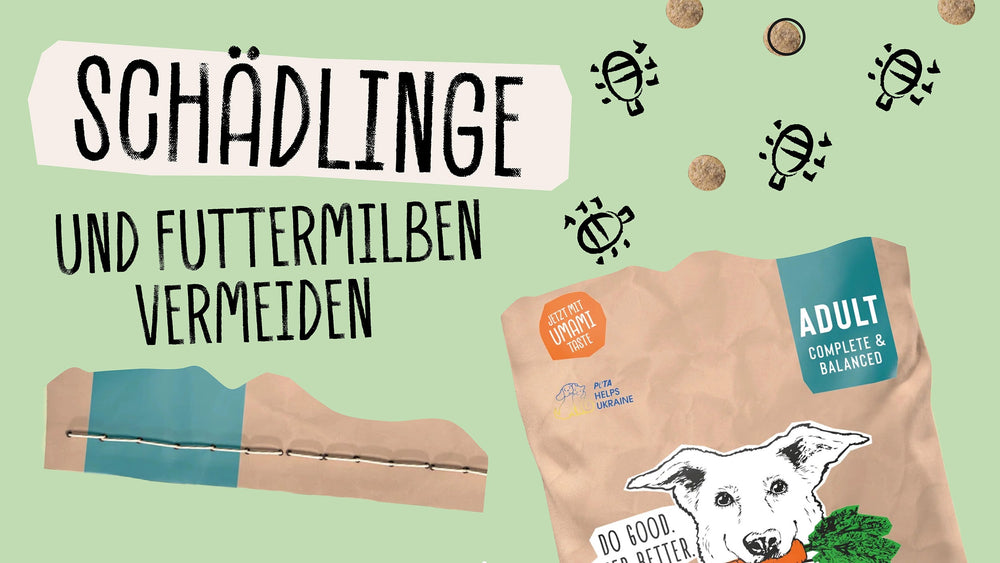
Eine oft übersehene Gefahr bei der Lagerung von Hundenahrung ist der Befall von Motten und Futtermilben. Diese Schädlinge können sich in dem Futter einnisten, wenn es nicht ordnungsgemäß aufbewahrt wird. Daher ist es wichtig, das Futter in luftdichten Behältern aufzubewahren, um unerwünschte Besucher fernzuhalten und deinen Hund zu schützen. Hierbei ist noch zu erwähnen, dass ein Futtermilbenbefall erst nach dem Öffnen der Packung möglich ist.
FUTTER EINFRIEREN BEI FUTTERMILBEN?
Ein weit verbreiteter Irrtum ist, dass das Einfrieren von mit Milben befallenem Futter die Allergiegefahr mindert. Tatsächlich sterben die Milben zwar ab, aber das Milben-Allergen bleibt bestehen. Das bedeutet, dass Hunde mit einer Futtermilbenallergie nach wie vor gefährdet sind. Vergleichbar wäre eine Erdnussallergie bei Menschen. Gefrorene Erdnüsse lösen bei Allergikern die gleichen Symptome aus wie frische Erdnüsse. Um Problemen vorzubeugen, solltest du also auf die richtige Lagerung als Prävention setzen.
NOCH MAL KURZ ZUSAMMENGEFASST
Insgesamt ist die richtige Lagerung von Hundefutter von großer Bedeutung, um sicherzustellen, dass unsere Fellnasen stets qualitativ hochwertiges Futter erhalten. Denk daran, immer kühl und trocken zu lagern, geöffnetes Nassfutter im Kühlschrank aufzubewahren, Trockenfutter luft- und lichtdicht zu verpacken und das Mindesthaltbarkeitsdatum zu beachten. Auf diese Weise sorgst du für die Gesundheit und das Wohlbefinden deines Hundes und vermeidest unerwünschte Schädlinge und Allergierisiken.
Share
Vivianne
Meine Mission bei VEGDOG ist das Beantworten aller Anfragen, Nachrichten & Co., die wir über Social Media bekommen. Meine persönliche Motivation und Mission eckt sich mit dem Ziel von VEGDOG, für allgemeines Tierwohl zu sorgen und ein utter bereitzustellen, das diese Werte vertritt und zudem vielen Hunden hilft.


 Vivianne